Select Language:
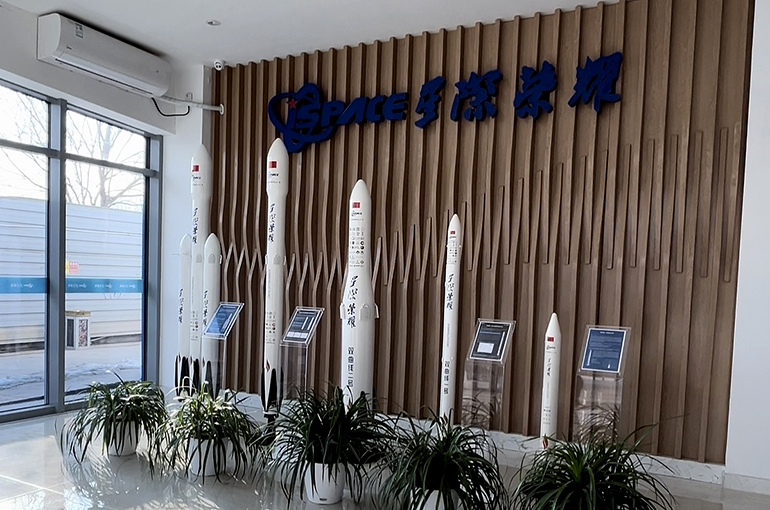
Interstellar Glory Aerospace Science and Technology, also known as iSpace, has completed the largest single financing round for a private Chinese commercial aerospace company. The company secured over 5 billion yuan (approximately $730 million) in a Series D++ funding round announced on February 9th. Leading the investment were Cowin Capital and existing shareholder Jingming Capital, with participation from Spring Partners, Chengdu Industry Group, and Qianlima Capital.
The funds will primarily support the development and commercialization of reusable liquid oxygen and methane carrier rockets. The company aims to advance its “launch on land, recovery at sea” approach, increase investments in assembly and testing facilities, expand launch capacity, and strengthen its industrial footprint across regions including Beijing, Shaanxi, Hainan, Sichuan, and Guangdong.
Currently, the firm is preparing for an initial public offering. As of the end of last month, progress was underway on this front.
Since the latter half of last year, investment in the commercial aerospace industry has gained momentum. In September, a Chinese space technology company completed a 2.4 billion yuan Series D funding, and the following month, another firm secured 2.5 billion yuan across two funding rounds.
This particularly large financing effort underscores the supply-demand gap in China’s commercial space sector. With over 200,000 satellites approved, demand for satellite network infrastructure has surged. Among private Chinese firms, iSpace stands out as one of the few with capabilities like reusable rockets, sea recovery of rockets, and the operation of a reusable assembly plant.
Founded in 2016, the company is among China’s earliest private aerospace ventures. In 2019, its Hyperbola-1 Y-1 rocket successfully reached orbit, marking the first private Chinese company to achieve high-precision orbit insertion.
Currently, the company is focusing on developing its Hyperbola-3 rocket, capable of reusable liquid oxygen and methane propulsion, with its first flight scheduled for this year.
 ChatGPT
 Perplexity
 Gemini AI
 Grok AI