
Select Language:
The largest consumer technology trade fair in Germany, held annually in Berlin, has emerged as a vital platform for Chinese companies aiming to expand into European markets, providing opportunities to engage with international media, partners, and industry resources, according to industry experts.
Events like this are more than just showcase opportunities; they are essential for cultivating trust and establishing relationships with foreign customers. Building a network often requires onsite visits, face-to-face meetings, and active engagement within the industry, a strategy emphasized by business consultants supporting Chinese brands’ global growth. Over the past five years, they have assisted more than 300 Chinese brands in their international expansion efforts. During this event, a media connection gathering was organized, bringing together over 60 influential journalists from Europe and the US, alongside the trade fair’s leadership, to facilitate direct dialogue with Chinese corporations.
Additionally, the trade fair’s leadership plans to visit China after the event to explore further collaborations with local businesses, demonstrating strong support for Chinese companies’ global ambitions through upcoming roadshows across the country.
With increasing trade barriers and geopolitical tensions, Chinese firms are shifting their focus from North America to Europe as part of a diversification strategy. Creating more collaborative, localized branding efforts has become key. Some industry insiders suggest that Europe offers a more accessible entry point, especially via affiliate marketing, which many Chinese firms find easier to penetrate compared to the saturated US market, where competition and higher media costs are significant challenges.
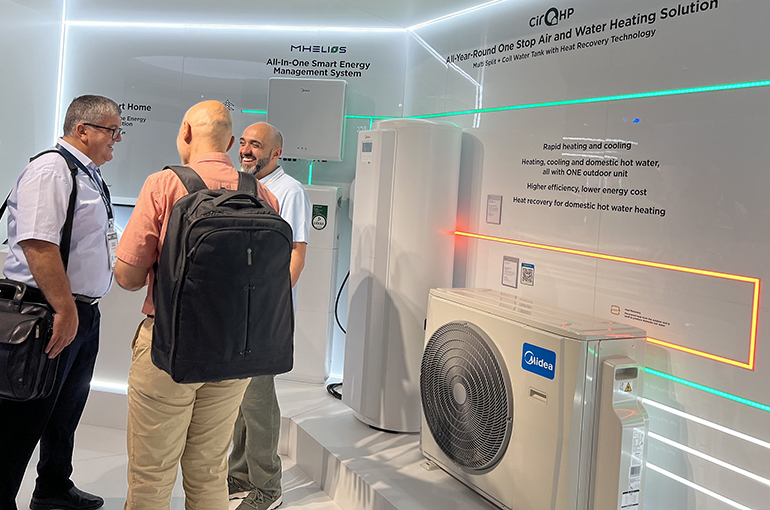
Although their presence might be smaller in Europe compared to the US, Chinese brands tend to have broader marketing channels there. Experienced firms serving major players like electronics manufacturer Anker Innovations, home appliance giant Midea Group, and robotic vacuum producer Roborock have demonstrated that capturing key markets such as Germany, France, and the UK can effectively establish a substantial foothold across Europe.
Furthermore, companies specializing in AI-driven financial technology—particularly those helping merchants and marketplaces manage post-purchase processes—are increasingly targeting regions with cultural similarities to the US, like Europe and Australia, especially when US-China relations face difficulties. Consumer behaviors such as return policy reviews are quite similar across these regions, enabling unified strategies to address customer needs effectively. Innovations like “worry-free purchase” models, where customers cover shipping costs, along with culturally aligned payment practices, enhance trust and ease expansion.
A significant challenge remains balancing rapid Chinese development—often dubbed “China Speed”—with the need for local adaptation. Facilitating swift responses through tools like WeChat groups is effective domestically but faces hurdles abroad. Realizing that markets have distinct practices, Chinese companies are encouraged to hire seasoned local talent capable of managing cultural nuances and brand building in their new territories. Each market develops its own practices, and trying to enforce one overseas can be counterproductive.
There is also a notable disparity in affiliate marketing adoption, with many top US e-commerce platforms utilizing such strategies, whereas fewer Chinese companies abroad employ them. Industry experts recommend that Chinese brands facing traffic and growth challenges should adopt mature foreign models rather than relying solely on domestic e-commerce tactics.
When it comes to product offerings, there are two prevailing perceptions among overseas consumers: traditional, low-cost “Made in China” products, and innovative, high-end “Invented in China” items. The former benefits from entry-level marketing channels, while the latter is better suited for direct-to-consumer platforms, emphasizing the importance of strategic positioning in different segments.
Beyond product localization, establishing trust and operational efficiency is vital. Strong communication channels and partnerships can enhance performance; for instance, increasing commission rates for partners can significantly boost sales. Companies like Seel provide after-sales solutions such as insurance models that transfer costs to consumers, helping Chinese brands build credibility and trust overseas. Their services have demonstrated increased conversion rates and customer loyalty, with protective shipping policies reassuring buyers and encouraging more orders.
Ultimately, expanding globally requires Chinese brands to foster local collaborations and align interests with regional stakeholders, ensuring sustained growth and success across western markets.
 ChatGPT
 Perplexity
 Gemini AI
 Grok AI