Select Language:
Hubei Province in Central China has unveiled an ambitious plan to develop a sensor industry cluster valued at 30 billion yuan (approximately $4.4 billion) over the next five years. The initiative aims to foster around 100 top-tier intelligent sensor companies within Wuhan’s Donghu New Technology Development Zone, also called Optics Valley, by 2030. This growth is expected to stimulate application industries to surpass 500 billion yuan (about $72.5 billion).
A dedicated “Smart Sensor Industrial Park” will be established within the zone to support the development and attraction of sensor companies involved in emerging sectors such as intelligent robotics, low-altitude economies, connected vehicles, and future healthcare. The park will focus on various sensor types, including force, flexible tactile, high-performance inertial navigation, and medical sensors. The overarching goal is to shift the industry’s focus from mere physical clustering to a more integrated ecological ecosystem, according to Zhou Guangyong, deputy director of the zone’s management committee.
Sensors play a crucial role across multiple sectors like industrial internet, intelligent machinery, and new energy vehicles. Liu Liangbo, deputy director of Hubei’s Department of Economy and Information Technology, emphasized that sensors are fundamental for the country’s industrial digitalization and smart transformation efforts.
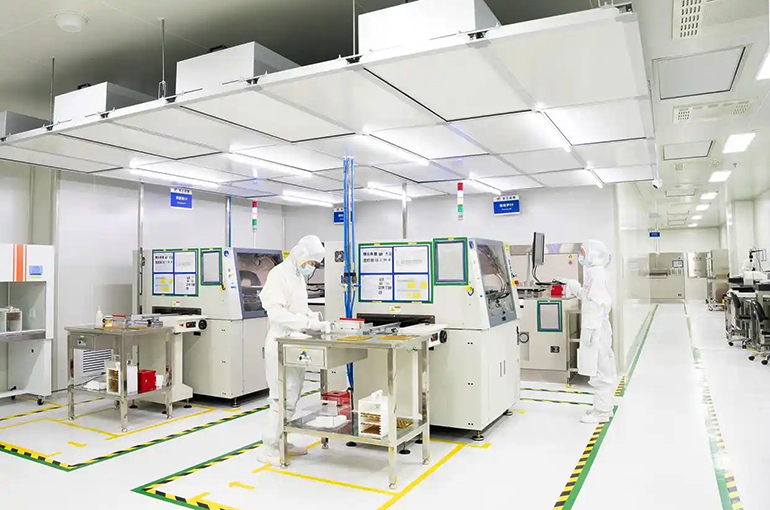
Hubei already hosts over 100 enterprises involved in the sensor industry’s upstream and downstream segments, producing competitive products in infrared and temperature sensing. Wuhan has built a comprehensive sensor supply chain covering design, manufacturing, packaging, testing, and system integration, valued at around 21 billion yuan last year.
To further propel the industry, Wuhan established a sensor industry innovation alliance last September. The city is actively cultivating interdisciplinary talent, fostering collaboration between universities and companies, and attracting high-level research experts from both China and abroad to develop local businesses. Liu Huan, vice dean of Huazhong University of Science and Technology’s School of Integrated Circuits, highlighted these efforts in supporting the city’s sensor technology sector.
 ChatGPT
 Perplexity
 Gemini AI
 Grok AI