
Select Language:
Global investors are beginning to question the uniqueness of U.S. assets, as even slight deviations from their dominance can have significant effects, according to a senior partner at a Swiss banking and financial services firm.
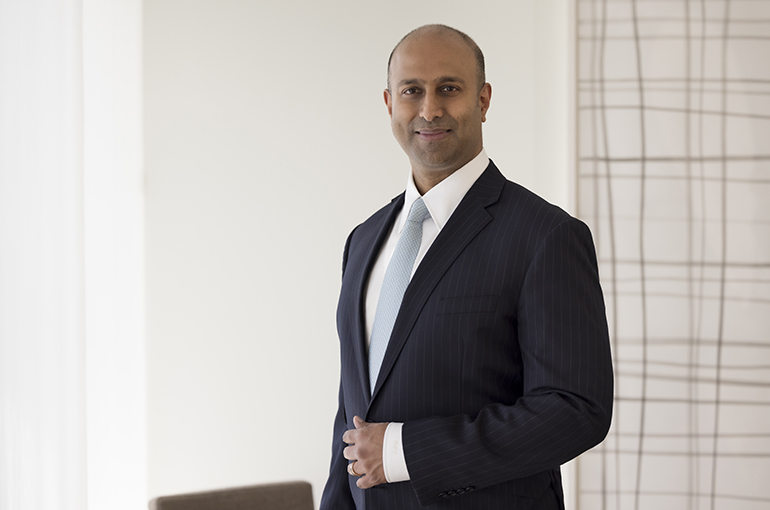
“We’re at a pivotal point in the discussion about U.S. exceptionalism and what might happen if that standing shifts,” said Raymong Sagayam. “Many international investors hold substantial portions of their portfolios in U.S. equities and bonds.”
He explained that two key factors influence this outlook: the proportion of international portfolios allocated to the U.S. and the share of their investments in U.S. dollars, especially for those whose local currencies differ.
More financial institutions with a positive exposure to the U.S. dollar are exploring hedging strategies to mitigate overexposure and the potential consequences of small shifts, which can be quite impactful. Some are even considering divesting from U.S. dollar holdings altogether, Sagayam added.
When asked about major trends over the next five to ten years, Sagayam highlighted Asia’s growth and concerns over the unsustainable levels of debt in Western nations.
“From a macro perspective, Asia remains a central focus and a long-term megatrend for us,” Sagayam said, emphasizing the firm’s decades-long presence across the region, including mainland China, Japan, Hong Kong, and Singapore.
He predicts a future where the global economy adopts more regionalized structures, offering diversified alternatives to U.S. assets.
“Another crucial issue is the unsustainability of debt, which is especially relevant for the U.S.,” Sagayam stated.
He pointed out that without a credible alternative, global investors may lose confidence in U.S. assets. “Considering safe assets as a plural concept and exploring various investment options could lead investors toward European equities,” he noted.
Opportunities may include investments in the Eurozone, reindustrialization efforts, and bonds in local currencies of emerging markets, he added.
The firm concentrates on three main investment themes: environmental sustainability, technological innovation, and societal change. Sagayam highlighted that the push for global decarbonization is strong, and energy demands will increase exponentially due to the need for technological and data infrastructure.
Despite ongoing tensions between the U.S. and China, the firm maintains significant exposure to Chinese markets. “Chinese bonds and equities are highly uncorrelated with other markets,” Sagayam explained. “Excluding them wouldn’t be a wise investment strategy.”
He believes that navigating geopolitical risks requires vigilance. “The best approach is always to stay prepared and avoid complacency.” Sagayam advised investors to take advantage of the fact that the world isn’t perfect, using smart hedging strategies to safeguard their portfolios.
 ChatGPT
 Perplexity
 Gemini AI
 Grok AI