Select Language:
Merz Aesthetics has introduced two of its leading injectables in China, marking an expansion of the German company’s footprint in a rapidly evolving market focused on regenerative aesthetic treatments and increased regulation of injectable products.
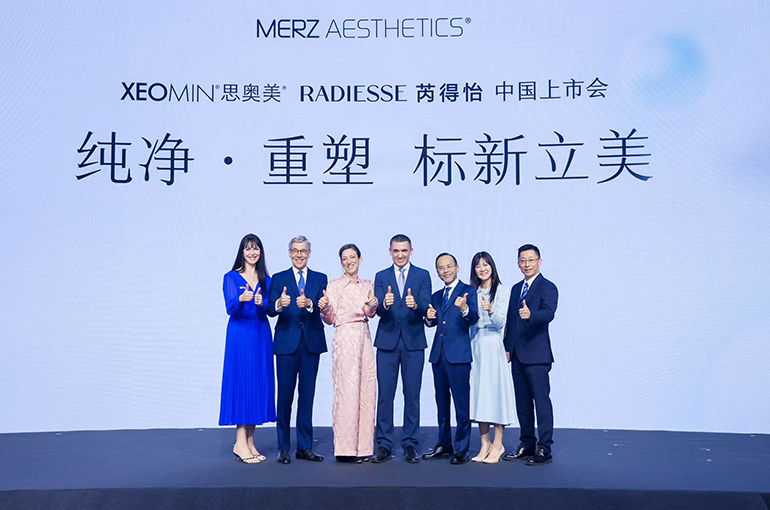
The launch of Xeomin and Radiesse in China reflects a long-term strategic commitment rather than a focus on immediate profits, according to executives from the Frankfurt-based company during an event in Shanghai on November 21.
Xeomin, a botulinum toxin type A designed for moderate to severe glabellar lines, received approval in China in February of last year. It is produced without complexing proteins or biological impurities, which helps reduce the risk of developing neutralizing antibodies that can lead to treatment resistance.
“We are thinking beyond short-term goals,” said Christian Baatz, managing director of the company’s holding group. “Success isn’t measured in quarterly reports but across generations,” he emphasized, highlighting the company’s 117-year history.
Radiesse, approved to enter China’s expanding biostimulator market in March, is a calcium hydroxylapatite filler cleared for subdermal use to correct nasolabial folds. The injectable creates a scaffold that stimulates fibroblasts to produce collagen, elastin, and other extracellular matrix components, providing structural support and promoting longer-term tissue regeneration.
“The core technology of Radiesse involves its dual qualities of ‘non-inflammatory activation’ and ‘extracellular matrix reconstruction,'” explained Wu Yan, vice president of the China Society of Minimally Invasive Aesthetic Plastic Surgery and Dermatology. “Its introduction helps align China’s regenerative aesthetic medicine practices with international standards.”
Growing Consumer Interest and Regulatory Challenges
Interest in calcium hydroxylapatite (CaHA) products has surged among Chinese consumers, with 87 percent in major cities willing to try biostimulators, according to an Ipsos survey commissioned by the company.
Globally, injectable CaHA represents about 7 percent of the dermal filler market, while hyaluronic acid holds roughly 77 percent, according to South Korean cosmetic supplier Pharmocean.
However, the high cost of CaHA products—often exceeding CNY10,000 (USD 1,410) per syringe—has led to questionable practices at some clinics, including off-label use and misrepresentation of products. The Medical Aesthetics Dispute Research and Mediation Center reports approximately 200 CaHA products have been approved in China, mostly for orthopedic or dental purposes, not facial aesthetics.
Only Radiesse and Aphranel from Shanghai Moyang Biotechnology have received regulatory clearance specifically for facial injections in China. Other CaHA products intended for different medical applications may vary significantly in particle size, structure, and biocompatibility.
“Administering CaHA facial injections requires highly skilled physicians who have undergone specialized training,” warned Zhang Jie, director of Shanghai Zhaoheyan Medical Beauty. “Incorrect injection sites or depths may lead to suboptimal results or even embolism, with no proven remedies available.”
Wu emphasized the importance of adhering to the principle of “small amounts, multiple sessions” to prevent overtreatment.
Merz’s Dedication to the Chinese Market
As the world’s largest dedicated medical aesthetics company, Merz views China as a vital growth market. The company assembled senior leadership from its global, Asia-Pacific, and local teams for the Shanghai launch event.
“China is a crucial strategic market for our global operations, and this launch marks an important milestone,” stated Lawrence Siow, president of Merz Aesthetics Asia-Pacific.
“Through professional education and fostering informed consumer awareness, we are committed to collaborating with industry leaders to promote innovation and sustainable growth in China’s medical aesthetics industry,” said William Cui, general manager of the company’s local branch.
The company dedicates 7 percent of its annual revenue to research and development, maintaining a global team of over 250 specialists. With 30 active projects and plans for 15 new regulatory approvals over the next five years, Merz supports innovation through three internal R&D facilities that handle everything from early development stages to clinical validation.
 ChatGPT
 Perplexity
 Gemini AI
 Grok AI