
Select Language:
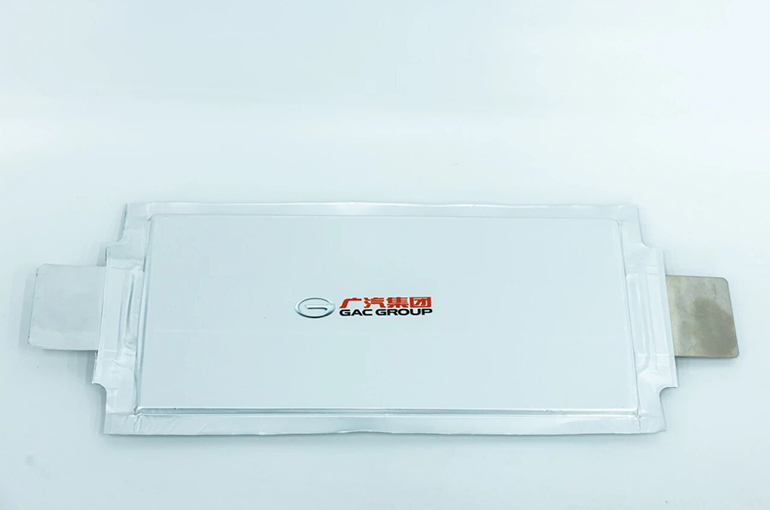
GAC Group has achieved a significant milestone as the first Chinese automaker to complete the construction of a pilot mass production line for automotive-grade all-solid-state batteries with capacities exceeding 60 amperes, according to the company’s chairman.
The new all-solid-state battery production line is now operational for pilot testing, as announced during a press conference at the ongoing 2025 Guangzhou International Automobile Exhibition. This development marks a critical step toward deploying solid-state batteries in vehicles on a small scale.
The energy density of GAC’s all-solid-state batteries nearly doubles that of current market offerings, stated Qi Hongzhong, director of new energy power research and development at GAC’s advanced platform technology institute. The company plans to start small-batch vehicle testing next year, with plans for gradual mass production scheduled between 2027 and 2030.
Over the past year, GAC has undergone a significant transformation, notably drawing inspiration from Huawei Technologies. The changes included restructuring internal organizations, implementing integrated product development approaches, and upgrading marketing systems.
As part of these reforms, GAC shifted from a traditional department-based structure to a “product-oriented team” model. This move aimed to eliminate inter-department barriers, enhance collaboration across functions, and boost overall operational efficiency, explained Xia Xianqing, the company’s new general manager.
In September, GAC expanded its collaboration with Huawei’s Intelligent Automotive Solutions division by launching a new brand called Qijing.
“Qijing targets younger, trendier consumers with high expectations for vehicle performance,” Xia explained. The first electric vehicle model under this brand is set to launch next year, with an expected price of around 300,000 CNY (approximately 41,800 USD).
Feng Yue reportedly emphasized the brand’s strategic importance, stating, “GAC is fully committed to Qijing.” The company is placing utmost emphasis on this initiative.
As part of its broader transformation, GAC is also reforming its sales channels, aiming to establish 600 brand experience stores across more than 90 percent of county-level markets nationwide. Initial investments and layout plans are already underway in the first 100 cities.
Despite progress, GAC still has room to improve in areas such as after-sales service, spare parts availability, and customer experience at its survey stores, noted Deputy General Manager Huang Yongqiang. The company’s plan is to expand its sales network to reach county and township levels to support its new energy vehicle strategy.
GAC’s electric vehicle division recently launched a new model, the Aion UT, in partnership with JD.com. With a starting price of just 49,900 CNY (about 9,950 USD), the Aion UT is designed to target lower-tier markets.
Huang pointed out that China’s new energy vehicle market is rapidly expanding from major cities into smaller towns at lower tiers. GAC intends to leverage JD.com’s online platform to grow its presence in these markets, with the Aion UT serving as the flagship product in this expansion.
 ChatGPT
 Perplexity
 Gemini AI
 Grok AI