Select Language:
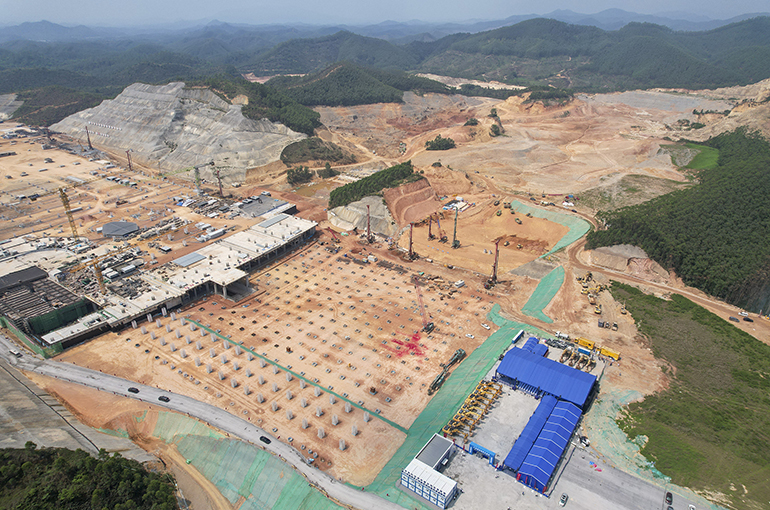
Construction has officially begun on the sixth major airport in the Guangdong-Hong Kong-Macao Greater Bay Area, located in Foshan, near Guangzhou. The project has a total investment of approximately $6.1 billion USD (CNY 41.8 billion). Known as the Pearl River Delta Hub (Guangzhou New) Airport, the initial phase includes two runways and a terminal, designed to serve 30 million passengers and 500,000 tons of cargo annually. By 2050, the airport’s capacity is expected to expand to accommodate 60 million travelers and 2.2 million tons of freight.
Currently, the only operational airport in Guangzhou is Baiyun International Airport, which managed 83.6 million passengers and 2.44 million tons of cargo last year. Once the new airport begins operations, it aims to fill the aviation gap on the west side of the Pearl River Estuary, better catering to local travel needs and establishing a globally competitive airport network in the region. This development will create a more balanced airport cluster alongside other major facilities in the area.
Within a 200-kilometer radius, the Greater Bay Area hosts five airports each handling over 10 million passengers annually: Guangzhou Baiyun, Hong Kong International, Shenzhen Bao’an, Zhuhai Jinwan, and Macau International airports. All are currently undergoing expansion projects. Managing these airports poses a challenge due to differing governing authorities, leading industry experts to suggest a need for higher-level coordination to optimize traffic rights and route management.
Strategic collaboration, such as encouraging cross-shareholdings among these airports, could help establish a cooperative framework involving capital investment. This approach would aim to improve coordination in airspace use, route planning, and the distribution of traffic rights and slots, ultimately enhancing regional competitiveness.
 ChatGPT
 Perplexity
 Gemini AI
 Grok AI