Select Language:
Many international coffee brands are expressing optimism about China, particularly regarding the demand for specialty coffee, while conducting market testing at an international exhibition in Shanghai.
Specialty coffee, which emphasizes quality and the consumer experience, is gaining market share as the intense “price war” and widespread industry expansion begin to slow down. Several Chinese industry experts shared this perspective during the annual Hotelex Shanghai Coffee & Food Festival. They also noted that this trend is a significant factor behind the recent surge in international brands aiming to establish a presence in China this year.
The event hosted nearly 500 exhibitors from all levels of the coffee industry, held at the National Exhibition and Convention Center from March 30 to April 1. There has been a notable increase in international participants, including coffee bean suppliers from Africa, specialty coffee brands from Japan and South Korea, as well as coffee roasters from Oman.
Ambaye, a coffee merchant from Ethiopia showcasing locally grown specialty green beans, stated that while his company has well-established channels in markets like the U.S. and Australia, he remains highly optimistic about China’s growth potential, driven by its large consumer base.
Specialty coffee generally refers to beans that score above 80 points in cupping evaluations, maintaining high standards from planting to brewing. These beans usually have a lower defect rate, better quality, and are sourced with careful traceability to the plantation estate.
Ethiopia is one of the world’s leading producers of specialty coffee. Last year, China imported 72,000 tons of Ethiopian coffee beans, a fourfold increase over the previous year, making Ethiopia one of China’s top sources, according to customs data.
Azura, a coffee roasting company based in Oman, mainly sells specialty roasted beans. Due to language barriers, a local green bean supplier assisted the company’s young staff in demonstrating their products to visitors at the event.
Despite the rise of numerous successful Chinese coffee roasters, Azura remains confident in its competitiveness and plans to enter China’s specialty coffee market segment, according to one of its team members.
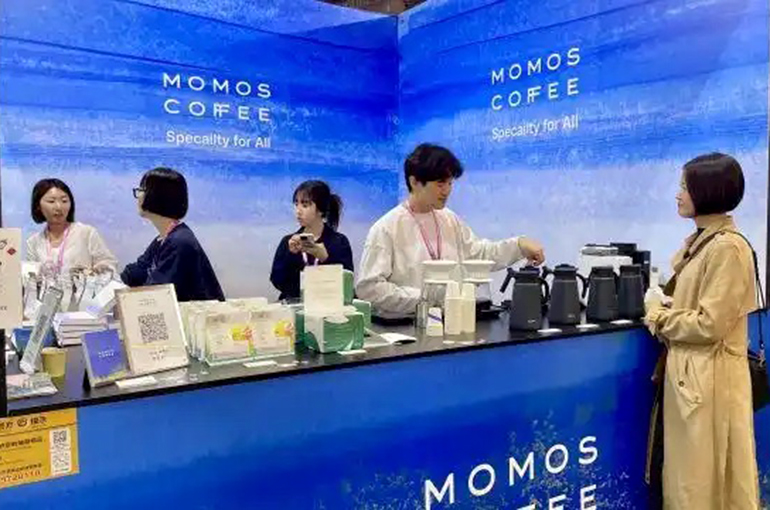
Throughout the event, visitors flocked to taste coffee samples from Busan-based specialty brand Momos, with many quickly sold out. Several attendees also engaged in discussions about potential collaborations.
China’s coffee market has experienced rapid growth, accompanied by increasingly intense competition.
A Chinese coffee trader commented that over the past year or two, the industry has experienced price wars, takeout battles, and a sharp rally in coffee futures, making it difficult for many players to stay afloat. While traditional commercial coffee markets face stiff competition, the specialty segment is exhibiting a stronger upward trend.
Many Japanese and South Korean specialty coffee brands attended the event, driven by sluggish domestic markets while China’s market continues to rise, seeking new growth opportunities.
The aggressive price competition and extensive expansion by leading Chinese coffee brands have lowered the average order value and shifted some specialty coffee consumers elsewhere. However, the price wars have also successfully cultivated the market, bringing new coffee drinkers and growing the consumer base for specialty coffee.
A specialty coffee shop owner in Jiangsu province shared that customer interest and demand for high-quality beans are on the rise. Customers increasingly inquire about flavor profiles, origins, and plantation stories when ordering, with the shop exclusively sourcing beans from specialty estates.
According to the Hongcan Industry Research Institute, China’s specialty coffee market was valued at nearly CNY 28 billion (USD 4.1 billion) in 2024. Despite a slowdown that year, its compound annual growth rate from 2020 to 2024 exceeded 20 percent.
 ChatGPT
 Perplexity
 Gemini AI
 Grok AI