
Select Language:
Demand for display panels has decreased following a drop in shipments of electronics such as smartphones, computers, and televisions, driven by soaring storage costs. Despite rapid advancements in product innovation fueled by artificial intelligence, the market faces headwinds.
“Rising storage prices have significantly impacted the entire consumer electronics industry,” said a senior executive at a major Chinese electronics manufacturer and the CEO of a leading LCD producer.
According to a tech research firm, the prices of dynamic random-access memory (DRAM) modules are nearing those of smartphone display panels. As a result, smartphone manufacturers have scaled back their procurement plans, which is expected to reduce shipments of active-matrix organic light-emitting diode (AMOLED) displays for smartphones from 817 million units last year to about 810 million this year.
For the LCD manufacturer, small-sized mobile phone panels are expected to be the most affected by the rising storage costs, the executive added. This will create short-term demand pressures for OLED displays used in smartphones.
Global shipments of personal computers are forecasted to decline by 5.4% in the upcoming year, leading to an overall decrease of 7.9% in display panel deliveries. While shipments of OLED panels are projected to increase, liquid crystal display (LCD) panel shipments are likely to plummet.
The markets for PCs and smartphones are in worse shape than earlier projections suggested, according to an international market research firm. Ongoing storage supply issues are expected to continue into this year, with global PC shipments dropping over 11% and smartphone shipments declining nearly 13%.
Major upcoming sporting events, including the Winter Olympics and the FIFA World Cup in North America, are anticipated to boost demand for large-screen TVs. Industry forecasts indicate a 1% to 2% rise in TV demand this year, with the total screen area projected to increase by more than 3%.
In January, display panel prices were supported by international sporting events and continued government subsidies for consumer electronics. Production restrictions during the Chinese New Year holiday tightened supply, which led to higher panel prices in February. The overall pricing trend for the first quarter will depend on manufacturers’ production strategies and market demand this month.
The manufacturer is exploring new international investments, including expanding manufacturing facilities and sourcing supply chains. Last year, stable operations at factories in India and Vietnam helped the company, and this year, efforts to grow the automotive display sector in Europe will be a focus.
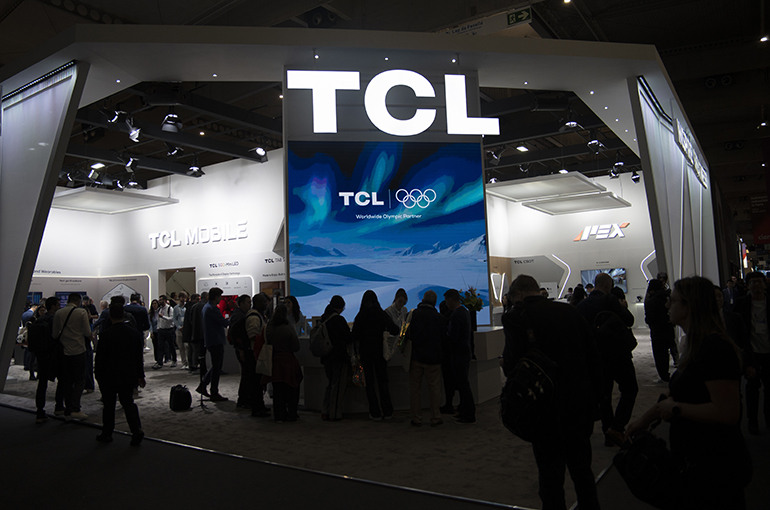
At the Mobile World Congress held in Barcelona, display manufacturers showcased new technologies and products tailored to meet the evolving demands of AI-enabled devices, emphasizing improved power efficiency, longer battery life, and low-power solutions.
 ChatGPT
 Perplexity
 Gemini AI
 Grok AI