
Select Language:
Most international patients currently receiving medical care in China are foreigners who already live and work there, according to multiple sources. Despite rumors circulating on social media that China is becoming a popular destination for medical tourism, the number of visitors traveling specifically to China for healthcare remains relatively low.
Recently, some social media posts suggest that as China loosens its visa-free entry policies, more foreigners are flying into the country for medical services, attracted by the perceived efficiency, affordability, and technological advancements of Chinese healthcare.
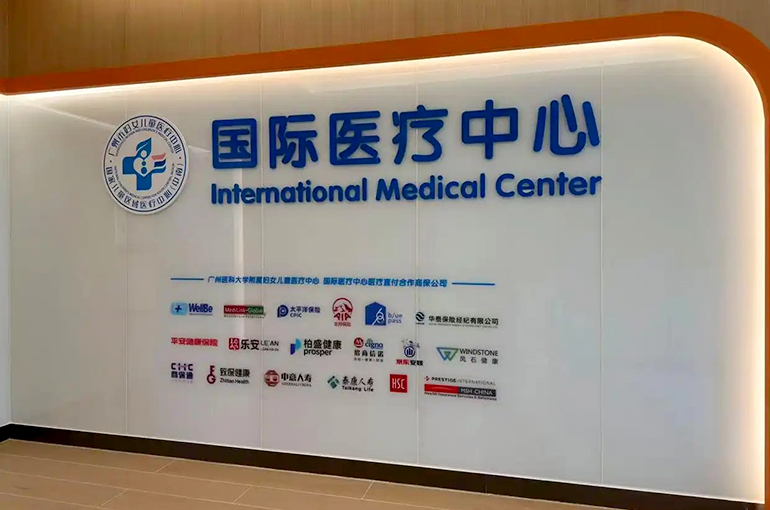
Since its opening in July last year, the International Medical Department at Guangzhou Women and Children’s Medical Center associated with Guangzhou Medical University has treated 152 foreign patients. However, most of these individuals are expatriates working in China.
Some visitors also leverage China’s visa-free policies to explore traditional Chinese medicine while traveling. For example, a Brazilian woman named Tania Mara Brasileiro visited China for the first time with her family of six in December 2025, and they all received traditional Chinese medicine treatments during their stay. “This is quite rare among foreign tourists,” their local tour guide, surnamed Zhang, told us.
China has long been a major provider of cross-border medical demand. Around 800,000 Chinese citizens travel abroad annually for treatment, making China one of the world’s largest sources of overseas medical consumption, according to the World Travel & Tourism Council’s report titled “A Prescription for a Healthier Economy.”
In comparison, China’s intake of foreign patients remains modest, leading to a substantial deficit in cross-border medical tourism. Transforming this deficit into a surplus is expected to take considerable time, according to recent research.
Growth Potential
A firm called Saint Lucia Consulting began attracting patients from neighboring countries to seek medical care in China late last year. The company is currently working on establishing partnerships with international departments at several top hospitals in Beijing, Shanghai, and other cities.
China’s medical standards are rapidly improving, with innovative drugs reaching the market more quickly. Paired with more relaxed visa policies, China has significant potential to build its cross-border medical tourism industry. However, international promotion efforts are still limited, meaning many potential patients remain unaware of the available options.
“South Korea welcomes over one million international patients each year, while the number visiting China is almost negligible,” said Cai Qiang, chairman of a global medical consulting firm. “Indonesia sees about 1.5 million patients seeking treatment abroad, but most go to Malaysia, Singapore, Japan, or the United States, with only a small fraction choosing China.”
Key Challenges
Several issues need to be addressed if China aims to attract more international patients.
For example, a recent case involved a Venezuelan patient with chronic lymphocytic leukemia who couldn’t continue treatment in China because his private insurance didn’t cover the cost of the country’s innovative medications. Covering expenses solely out of pocket would have been prohibitively expensive, so he stopped treatment.
Visa issues also pose significant obstacles. Most international patients enter China on tourist visas, which have strict time limits. For individuals with severe illnesses requiring surgery, the current maximum stay of 30 days may not be enough for recovery.
Moreover, cross-border payment systems for medical expenses are still developing, and insurance coverage for international medical treatments in China remains limited.
Note: The original content’s timestamp and source have been omitted per instructions.
 ChatGPT
 Perplexity
 Gemini AI
 Grok AI