
Select Language:
The market for artificial intelligence toys in China is expanding rapidly, driven by major tech companies like Huawei launching new products. However, industry insiders warn that most of these toys are built with similar basic hardware and their intelligence still falls short of expectations. This has led to predictions of market consolidation as early as next year.
The government is actively promoting the growth of the AI toy sector, recently announcing initiatives to encourage collaboration between toy manufacturers and AI developers. Last year, the industry was valued at approximately 24.6 billion yuan (around $3.48 billion), and growth is expected to continue, reaching an estimated 29 billion yuan this year, according to the Ministry of Industry and Information Technology.
Sales of AI toys saw a remarkable increase in the first half of this year, tripling compared to the same period last year and increasing sixfold from the second half of the previous year, according to data from a major e-commerce platform.
Huawei’s first AI-driven emotional companion designed for children, Clever Buddy, has become a top seller. Priced at just 399 yuan (about $56), it sold out almost immediately after its launch on November 28.
In Shenzhen’s popular Huaqiangbei electronics market, most AI toys priced above 200 yuan (roughly $28) rely on off-the-shelf large language models like ByteDance’s Doubao. These basic models typically provide simple features such as chat, storytelling, long-term memory, and voice calls, the Securities Times reported.
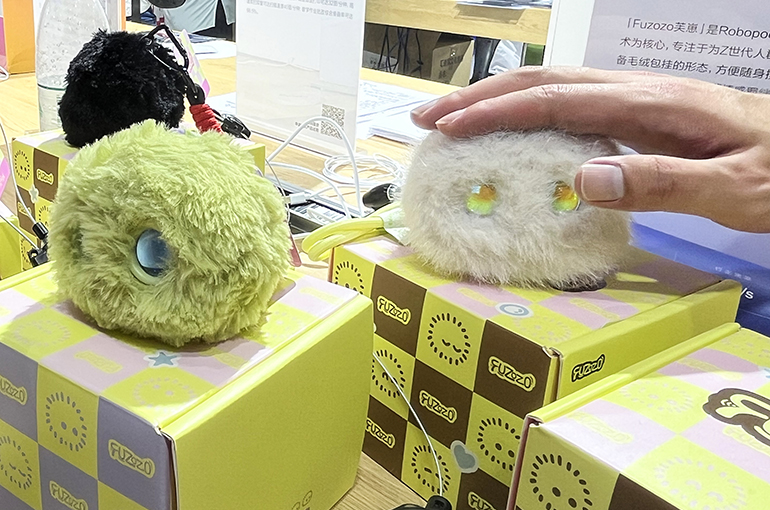
Higher-priced models incorporate additional hardware like cameras, allowing them to recognize human emotions through facial expressions. Sellers in the market note that converting traditional plush toys into “AI toys” can be as simple as adding a chip module, sensors, and batteries. The core chip can cost as little as 20 yuan (around $2.83).
Consumers have expressed dissatisfaction online, claiming that many AI toys often repeat the same stories and lack the promised long-term memory or emotional interaction capabilities. A shop owner on a popular e-commerce platform stated that initial return rates reached as high as 40%, though that number has since decreased to below 20%. Still, returns remain an ongoing issue.
Industry experts predict a major shake-up in the market next year as many manufacturers struggle with high hidden costs. Developing and maintaining cloud infrastructure, content moderation, and ensuring privacy compliance all eat into profit margins, according to Luke Lin, founder and CEO of Lockin.
Lin identified three categories of companies expected to survive: large consumer electronics firms like Huawei and Xiaomi, content creators such as The Lego Group and Disney, and service providers focusing on vertical scenarios such as early education, chronic illness support, and elderly care.
 ChatGPT
 Perplexity
 Gemini AI
 Grok AI