Select Language:
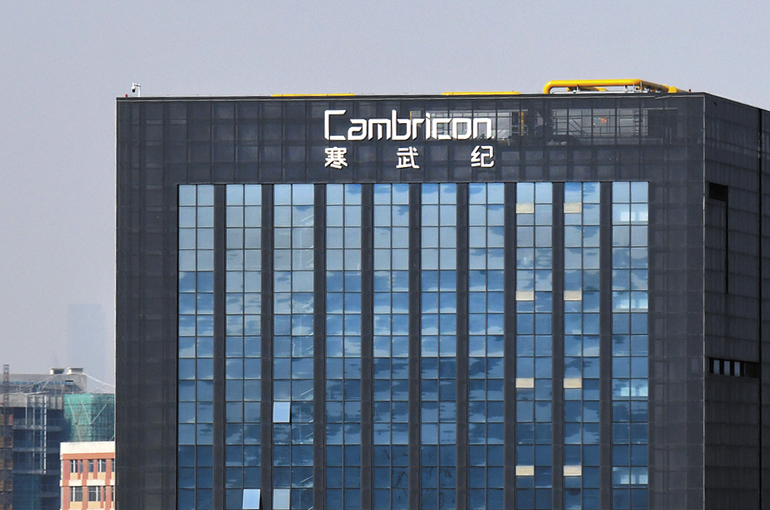
Cambricon Technologies, a leading Chinese artificial intelligence chip manufacturer, has been sued by its former chief technology officer over stock incentives, with total claims amounting to approximately 4.3 billion yuan (roughly $604.3 million USD).
Liang Jun, who served as CTO and deputy general manager from October 2017 until February 2022, filed the lawsuit in Beijing’s Haidian District People’s Court, seeking compensation related to equity incentives. The case is currently pending trial.
According to Liang’s complaint, he joined the company in 2017 after being promised stock grants. When the company went public on the Shanghai Star Market in July 2020, Liang acquired 11.5 million shares indirectly through an employee shareholding platform.
Liang asserts that in 2022, the company failed to provide the working conditions specified in his employment contract, which led him to resign. After his restrictions on indirect shares were lifted in January 2024, the company allegedly refused his request to sell shares, leading to the legal dispute.
The company stated that Liang’s departure was due to “differences between the two parties” and noted that there is no public evidence supporting Liang’s claims about breach of labor conditions.
It was also mentioned that Liang’s claim for compensation does not align with the shareholding agreement, which requires that employees resigning during the lock-up period have their shares bought back by the company. Liang allegedly refused to comply with this clause.
Prior to this lawsuit, Liang had filed two other cases concerning the same buyback clause, both of which he lost. Additionally, entities related to the company’s stock incentive plan filed another lawsuit in 2023, demanding that Liang fulfill the buyback obligation, a case that remains unresolved.
Amid the AI boom, the company’s stock has seen significant growth in recent years, with a 147% increase in 2023 and a 388% rise in 2024. Today, the shares declined 2.1% to approximately 1,346.60 yuan (around $189 USD), though they remain about 105% higher for the year.
This year, the company recorded its first-ever annual profit, driven by rising demand for AI chips. In the first nine months, it reported a net profit of 1.6 billion yuan (about $225 million USD), a turnaround from a 724 million yuan (around $100 million USD) loss the previous year, with revenue nearly 25 times higher year-over-year at 4.6 billion yuan.
 ChatGPT
 Perplexity
 Gemini AI
 Grok AI