Select Language:
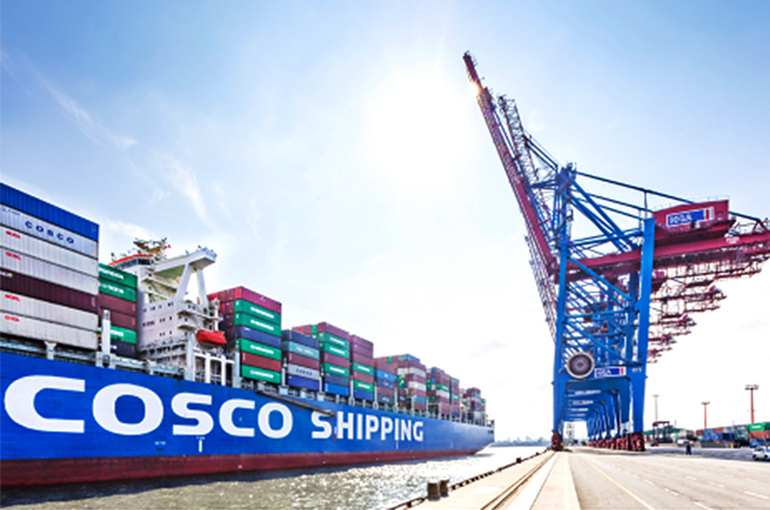
On March 6, following the announcement that all new orders for routes to and from Middle Eastern countries would be suspended due to local restrictions on maritime traffic, other subsidiaries of the state-owned shipping giant clarified that their operations remain unaffected.
An energy transportation investment firm involved in oil and gas logistics reported that its production continues as usual, despite the significant impact of the Strait of Hormuz closure on global energy shipping. The company noted that the effect on its financial results could not be determined yet, as first-quarter earnings typically reflect freight rates from December, January, and February.
On March 4, the shipping line announced an immediate halt to new bookings on relevant routes until further notice to ensure cargo safety and maintain overall shipping stability amid escalating Middle Eastern conflicts and associated restrictions through the Strait of Hormuz. This suspension affects new shipments to and from the United Arab Emirates, Qatar, Bahrain, Iraq, Saudi Arabia, and Kuwait, and vice versa.
Another subsidiary primarily engaged in container manufacturing and leasing stated that their business operations would stay unaffected by Middle Eastern tensions. Meanwhile, a company that provides marine and coastal freight services indicated that shipping volume to the Middle East constitutes a small portion of their total, so the revenue impact is expected to be minimal. They added that they will monitor the situation closely and possibly implement similar safety measures if security risks increase.
Additionally, the shipping conglomerate confirmed that it would follow suit by suspending all bookings to and from the Middle East. They emphasized that they would wait for the upcoming quarterly report before evaluating potential financial impacts, with safety remaining the top priority amidst the current uncertainties affecting shipping rates and operations globally.
As of the previous year’s end, the fleet of the shipping company boasted 1,660 vessels with a capacity of 135 million deadweight tons, making it the largest in the world. The company operates over 1,600 offices worldwide, with routes covering more than 1,500 ports across over 160 countries.
All Middle Eastern routes have been halted, with some ships already en route choosing to turn back, an industry insider told Yicai. The sector remains in a cautious wait-and-see mode, as companies decide whether to hold off until routes reopen or incur higher costs by rerouting to distant ports for transshipment.
Other Chinese shipping firms also addressed recent regional tensions. One company assured that their operations are normal and the overall impact is manageable, though they acknowledged significant safety risks to tanker routes traversing the Persian Gulf. Another firm specified that their transportation of hazardous chemicals mainly takes place in Northeast Asia, Southeast Asia, and India, and thus is not directly affected by the Middle East conflict. However, they noted that volatile oil prices could have some influence on their business.
Recently, futures markets for container shipping experienced notable swings. For example, contracts on the Shanghai International Energy Exchange reached daily maximum limits on March 2 and 3 but plummeted the next day, with some individual stocks hitting the lower limit.
Iran’s military officials stated on state television that they had not blocked the Strait of Hormuz, asserting that ship passage continues under international protocols. In response, the container shipping futures index that had surged over 17 percent during the day fell by more than 3 percent.
The escalation of geopolitical tensions has strained demand in the very large crude carrier (VLCC) sector, with supply shrinking significantly, leading to soaring spot freight rates, according to a fund associated with the Industrial and Commercial Bank of China and Credit Suisse. The restrictive navigation in the Strait of Hormuz could drive VLCC freight rates even higher in the short term, despite already reaching elevated levels, prompting ongoing attention to developments in the region.
 ChatGPT
 Perplexity
 Gemini AI
 Grok AI