
Select Language:
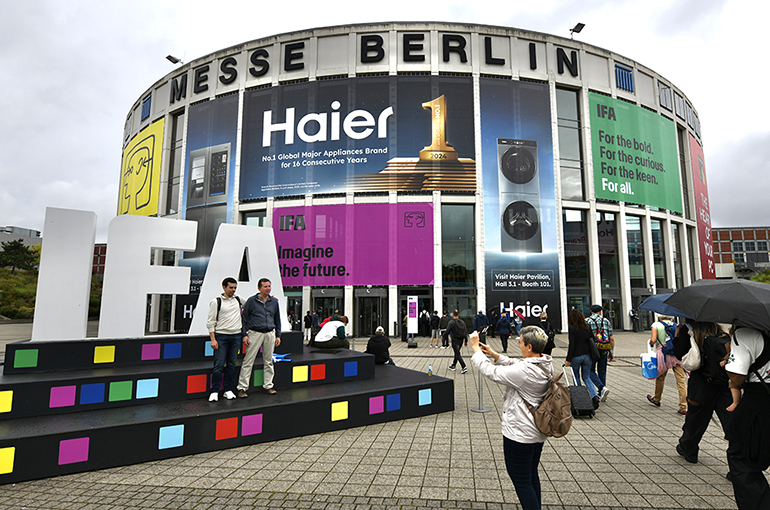
Chinese companies showcased a diverse range of innovative products at the world’s largest home and consumer technology fair in Berlin, demonstrating how they are influencing the global consumer electronics industry through technological innovation.
The fair underscores a shift among Chinese brands from rapid expansion to focus on quality improvement, moving away from price-based competition towards innovation driven by technology, and transitioning from merely producing products to creating value. Analysts note this trend reflects not only advancements in Chinese manufacturing but also a broader reshaping of the global industrial landscape. At this pivotal moment, companies with a long-term vision that prioritize social value are poised to gain a competitive edge worldwide over the next decade.
“The visibility of Chinese companies at the event is everywhere—from impressive, large booths to senior executives attending from various firms,” said the CEO of the fair. “What stands out is the variety: Chinese firms are launching next-generation displays, major appliances, drones, electric mobility solutions, and platforms powered by artificial intelligence of Things.”
Major brands like TCL, Hisense, Haier, DJI, and JD.com aren’t just participating—they are influencing discussions on partnerships, retail strategies, and future technological developments across Europe.
Over 38% of the 1,795 exhibitors are from China, marking a 10% increase compared to earlier industry shows this year. These companies are active across sectors such as home entertainment, smart home systems, large appliances, mobile devices, wearable technology, green energy, electric mobility, and AI-driven components and solutions. This broad participation highlights China’s central role in global innovation.
A key takeaway from the event is the growing integration of AI into everyday consumer scenarios. A representative from an augmented reality glasses firm explained that AI is no longer a mere concept but is now deeply embedded in products like home appliances, vehicles, and wearable tech, significantly influencing global competition and innovation.
The firm introduced their latest AR glasses, equipped with their proprietary operating system, which are the world’s first mass-produced wireless all-in-one AR glasses with full-color array waveguides, integrating AI semantics, spatial computing, and multi-screen collaboration. The response from European visitors was overwhelmingly positive, demonstrating high interest and engagement.
In the augmented reality glasses segment, Chinese firms are already among the top players, excelling in lightweight hardware design, AI algorithms, user interaction, practical application, and ecosystem development. Other exhibitors displayed their latest models, showcasing the vibrant innovation landscape.
In the beauty tech sector, a Chinese firm presented a pioneering hair removal device and a light therapy mask, marking a milestone as beauty technology gains mainstream acceptance. Customer responses have been highly favorable, particularly highlighting ease of use and effectiveness.
Additionally, a company specializing in autonomous lawnmowers demonstrated their latest robotic products that utilize advanced positioning, navigation, and path planning technologies—highlighting the country’s strength in refining smart solutions for yard care. Their extensive research in major markets like the US and Europe ensures their products meet real user needs and regional preferences.
Chinese companies also dominate the robotic vacuum segment, holding over half of the global market, with brands like Roborock, Ecovacs, Dreame, and Narwal leading the way, followed by an American competitor. New products from Roborock were also highlighted at the event.
GlocalMe, a prominent player in mobile connectivity solutions, showcased its latest devices, including the world’s first pet smartphone and advanced global hotspots, emphasizing its transformation from hardware focus to an integrated ecosystem of hardware, software, and services. The company’s revenue from connectivity services surged significantly this year, driven by higher margins and increased user retention of value-added services.
Chinese firms are also redefining global business models, expanding beyond traditional markets into new regions with integrated solutions. They emphasize rapid innovation cycles, short product development times, and the creation of comprehensive ecosystems that encompass devices, services, and connectivity.
For example, GlocalMe has significantly expanded its service offerings, and a manufacturer of autonomous lawnmowers has targeted high-potential markets in Europe and the US based on detailed market research. Many Chinese companies are shifting from solely exporting products to building brands focused on technology, innovation, and localized operations, which is seen as vital for long-term success and resilience against geopolitical challenges.
Despite geopolitical uncertainties, global consumer demand remains consistent. Companies see opportunities in localizing products and building trust through transparency and sustainability efforts. While North America remains a primary market, European sales are outperforming expectations, and recent product launches have circumvented US tariffs, illustrating strategic agility.
Brands are increasingly focusing on delivering high-value experiences rather than just cost advantages. They are transforming into comprehensive brands that offer a range of services and technologies, prioritizing innovation, brand reputation, and adaptability across diverse markets.
Industry experts recommend that companies seeking to expand in Europe should prioritize local adaptation, build trust from the outset, invest in after-sales support, and adhere strictly to regional standards and regulations. Understanding the importance of building a reliable, transparent brand that emphasizes sustainability and long-term relationships is crucial for success.
Looking ahead, the next fair is expected to feature a more balanced global representation, emphasizing participation from Europe, Asia, North America, and emerging markets like India and the Middle East. The mix of established brands and innovative startups will foster cross-industry collaborations, blending consumer technology with sectors like health, energy, transportation, and content creation.
The overall trend highlights China’s rising role as a major driver of innovation and the transition from mere product exports to branding and value creation on a global scale.
 ChatGPT
 Perplexity
 Gemini AI
 Grok AI