Select Language:
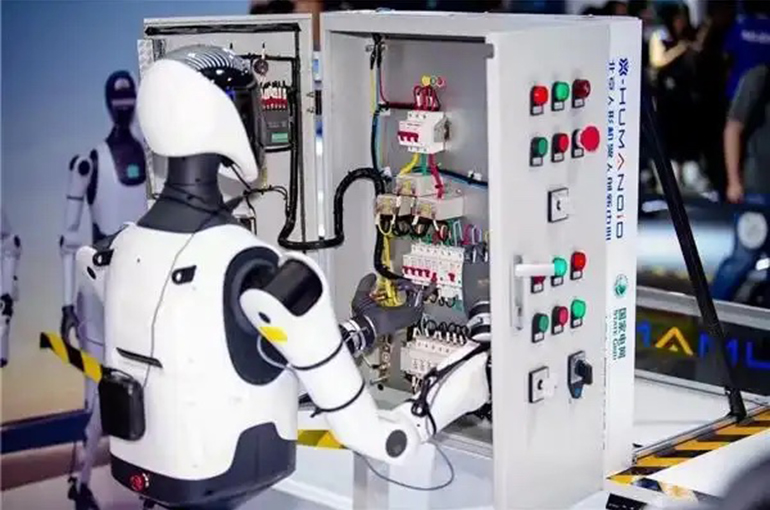
More and more Chinese robotics companies are opening up development platforms that enable customers to customize and enhance robot functions. In today’s competitive landscape, success depends less on a robot’s complex capabilities and more on how easily users can adapt and apply these machines in real-world settings.
Last week, a prominent robotics firm introduced a comprehensive teleoperation platform for its G1 humanoid robot. This system allows the robot to mimic a wide range of human movements—such as washing dishes, folding laundry, or even sparring. At the end of October, another company launched Link Craft, the world’s first robot content creation platform that requires no prior technical experience to use.
An industry insider from a Shenzhen-based robotics company explained, “It’s becoming increasingly difficult to distinguish hardware performance among similar-sized robots. Customers now seek new reasons to choose your robot, which means providing tools for secondary development.”
This development marks a significant departure from earlier this year when hardware capabilities strongly dominated the market. “The humanoid robot sector has experienced rapid growth over the last ten months,” the source noted.
Despite this shift, the company maintains a strong hardware position. Its new teleoperation platform could also help gather large amounts of detailed human motion data, allowing the company to accelerate AI improvements and enable robots to upgrade their abilities independently. This approach aims to dispel the stereotype that these robots are only suitable for staged performances.
Before Shanghai-based AgiBot released its platform, programming a robot for a simple three-minute dance routine could have cost between CNY20,000 (around USD2,820) and CNY30,000 (about USD4,227) in external development fees, according to a robot rental service provider.
While building these development platforms requires significant upfront investment, the potential long-term benefits are considerable, especially as user numbers and data grow. Revenue streams are not limited to software subscriptions or added features; more importantly, these platforms help boost user engagement and loyalty.
In the ongoing quest to develop platform-based tools, the focus is no longer solely on technological iteration but on creating a sustainable robot ecosystem. The key challenge for companies is ensuring their robots stay useful over time and enabling users to develop new applications through secondary development.
 ChatGPT
 Perplexity
 Gemini AI
 Grok AI