Select Language:
Chinese e-commerce platforms are increasingly focusing on collectibles, as sales in this category are outpacing those of traditional toys, with industry experts predicting a potential boom over the next five to ten years.
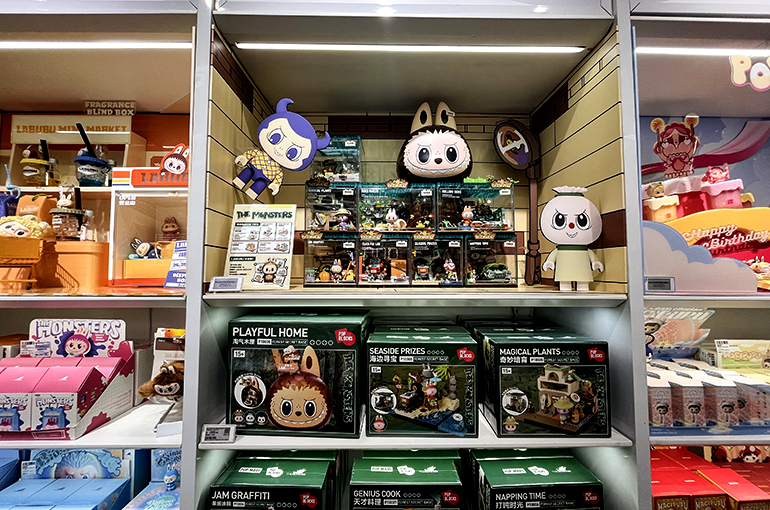
The country’s designer toy market is anticipated to experience rapid expansion in the coming decade, according to a recent industry conference. Leaders in the toy and collectibles sector noted that core categories on major online retail sites, such as blind boxes—which feature similar packaging but contain different items—Hanfu dolls dressed in traditional Chinese clothing, and Japanese school uniform-themed toys, saw growth of over 50% last year, reaching around 14.6 billion USD.
In 2022, sales of popular and collectible toys in China increased by approximately 45% year-over-year, amounting to nearly 9.9 billion USD, as reported by the national toy association. Meanwhile, traditional toy sales, excluding collectibles, grew modestly by about 5.8%, reaching over 16.8 billion USD.
Even plush toys are advancing in price; as brands like Pop Mart become mainstream, many high-quality plush figures now retail between 13 and 15 USD, a significant increase from about 3 USD five years ago.
After several years of rapid growth, the expansion of peripheral designer toys is expected to slow down, with industry insiders suggesting that this year’s sales growth might not match last year’s, despite ongoing surges in blind box availability, game-related items, and celebrity-themed collectibles. These segments are still expected to see strong growth.
Designer toys are increasingly intersecting with entertainment, gaming, and e-sports industries. Over the past year, blind boxes, merchandise related to physical gaming and e-sports, and derivative products have ranked as the top segments within the designer toy market on major e-commerce platforms.
Supply chain issues are becoming a major concern as demand continues to outstrip production capacity. One industry expert highlighted that supply has always been tight; during peak demands, some producers might deplete all available figurines quickly. Although overall manufacturing capacity is expanding, many smaller factories have yet to upgrade their supply chains. Since designer toys require precise molding, detailed design, and high-quality coloring, some leading manufacturers have orders scheduled as far out as 2030, while many others still lack the craftsmanship necessary to produce premium collectibles.
 ChatGPT
 Perplexity
 Gemini AI
 Grok AI