
Select Language:
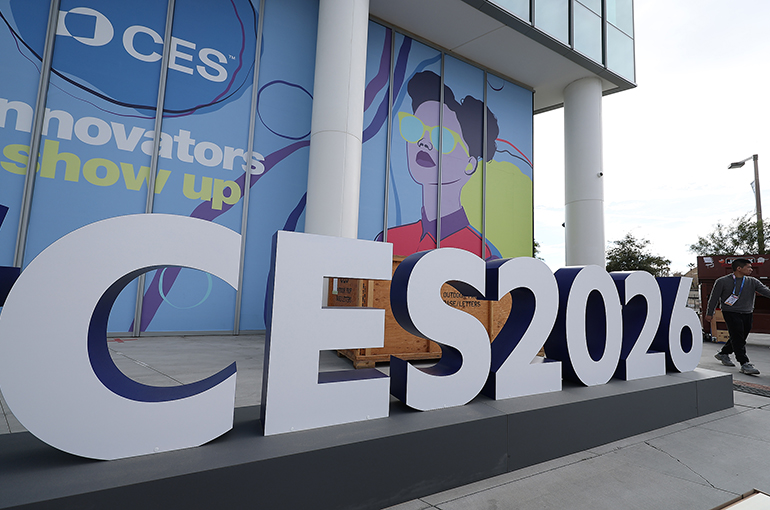
Chinese tech companies are unveiling a diverse range of artificial intelligence devices at this year’s Consumer Electronics Show, showcasing the latest advancements in integrating AI into both consumer and industrial products. Exhibits include embodied AI, clean energy solutions, AI translation tools, smart wearables, and consumer robots. The event reflects a significant shift from traditional consumer electronics to system-level innovations focused on AI, marking a broader trend in the industry. The multi-day trade show is opening today in Las Vegas.
According to a recent research report, this year’s CES appears to be transitioning its core theme from showcasing conventional consumer gadgets to emphasizing system-level technological transformations driven by AI. This shift makes the event a key platform for observing how AI applications move toward commercialization, with a particular emphasis on edge AI, industrial AI, and automotive intelligence.
Attendees from China are demonstrating how AI can be integrated into both industrial and consumer contexts. For instance, an automotive diagnostics company is exhibiting an “embodied cluster smart solution,” which includes intelligent charging robots and inspection robots designed to support autonomous charging stations and infrastructure inspections.
A precision component manufacturer is presenting its robotic technology ecosystem, highlighting key components and application solutions. Since early last year, the company has completed hardware assembly for over 5,000 humanoid robots and aims to rank among the top three global manufacturers of embodied smart hardware.
Additionally, a supplier of glass and structural parts for smartphones and smart devices is showcasing a comprehensive AI hardware ecosystem. This includes embodied AI, AI data centers, consumer electronics, AI hardware, and smart cockpit systems—all for the first time.
A pioneer in clean energy technology introduced the Charger 2, recognized as the industry’s first unified car and solar smart energy hub. It can harness energy from a vehicle’s alternator and solar panels simultaneously to deliver 1,200 watts— thirteen times faster than conventional car outlets.
The same company also revealed the Elite 100 V2 Bio-Based Edition, the first portable power station with a chassis made from bio-circular plastics, reducing carbon emissions during manufacturing by 25%. Other products include the compact Elite 300 3-kilowatt-hour power station and the Pioneer Na sodium-ion model, designed for extreme cold weather conditions.
A company specializing in AI earbuds translation launched the W4 AI Interpreter Earbuds, which boast 98% translation accuracy and an almost negligible 0.2-second lag. These earbuds are powered by a proprietary Babel OS 2.0 system capable of context-aware translation, even for similar-sounding words.
A startup in consumer robotics introduced Sirius, a robotic dog utilizing proprietary Neurocore motor technology that replaces traditional wiring, allowing for more realistic and flexible movements. The robot aims to facilitate emotional interaction and can be controlled via a smartphone app, remote control, or augmented and virtual reality interfaces.
This year’s event has also become a showcase for Chinese smart glasses manufacturers. Companies such as Rokid, Xreal, RayNeo, and INMO demonstrated their latest products, which are becoming more independent and versatile for various use cases. Furthermore, market sources expect ByteDance to launch its Doubao AI Glasses within the first quarter.
More than 1,290 U.S. companies are participating in this year’s event, making it the country with the most attendees, followed by China with over 1,000 companies, and South Korea with more than 800, according to unofficial industry data.
 ChatGPT
 Perplexity
 Gemini AI
 Grok AI