Select Language:
In December, Chinese automakers experienced a remarkable 127% increase in vehicle sales across Europe, despite the European Union’s significant tariffs on electric vehicles imported from China. Last month, these manufacturers sold approximately 109,900 vehicles, surpassing the 100,000-unit milestone for the first time, according to early data from market research firm DataForce. Their share of the European market more than doubled, reaching 9.5% from just 4.5% a year earlier.
Overall vehicle sales in Europe rose 7.6%, reaching 1.15 million units in December, contributing to a total of 13.3 million units sold in 2025—a 2.3% increase over the previous year. The surge was notably driven by the rapid growth in electric and plug-in hybrid vehicle segments, which saw sales jump 30% and 34%, respectively.
Throughout the entire year, Chinese automakers sold around 810,000 vehicles in Europe, nearly doubling their sales from the previous year with a 99% growth rate. Their market share expanded to 6.1% from 3.1%, reflecting substantial market penetration.
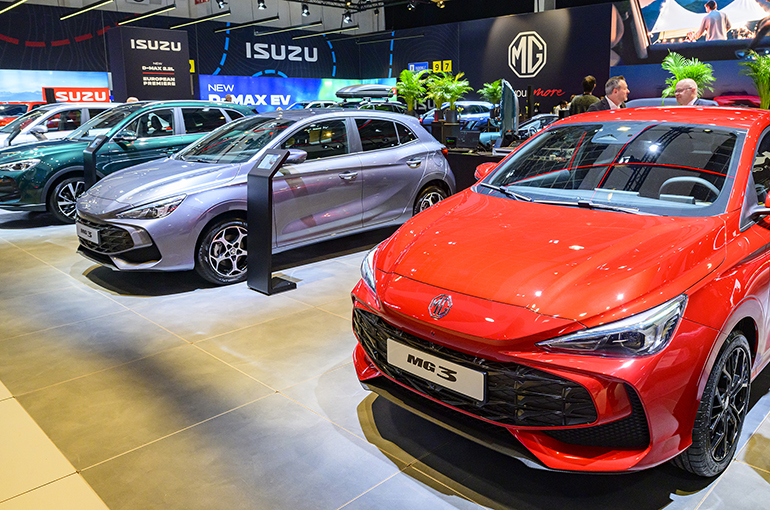
Among Chinese brands, MG, a part of SAIC Motor, led the charge in European sales last year, with a 26% increase to 307,000 units and ranking 16th in overall European car sales, making it the only Chinese brand to reach the top 20. BYD followed closely, ending the year with approximately 187,000 vehicles sold in Europe—a staggering 276% year-over-year growth, rising from 31st to 22nd place in the overall rankings. The top five brands also included Chery Automobile’s Jaecoo and Omoda, as well as Geely’s Polestar.
Over the past two years, Chinese automakers have seen rapid growth in the European market. In October 2024, EU member states voted to impose a maximum countervailing duty of 35.3% on Chinese-made electric vehicles, in addition to a 10% existing tax, for five years.
Recently, negotiations between China and the EU made considerable progress regarding EV import tariffs. The Chinese commerce ministry announced that both sides aim to replace these high tariffs with a mechanism based on price commitments. During the initial implementation phase, some automakers might experience short-term fluctuations in sales as they adjust their pricing and product structures, according to Cui Dongshu, secretary-general of the China Passenger Car Association.
Despite these temporary challenges, Cui believes that as companies adapt to the new regulatory framework, local production capacity will increase, and product competitiveness will improve. This will facilitate a gradual recovery of Chinese electric vehicle sales within the EU. He also predicted that between now and 2028, the volume of Chinese electric cars exported to the EU will grow at an average annual rate of around 20%, establishing China as a key player in the global electric vehicle market.
 ChatGPT
 Perplexity
 Gemini AI
 Grok AI