
Select Language:
On February 24, leading Chinese artificial intelligence startups MiniMax, DeepSeek, and Moonshot AI were accused of executing distillation attacks by a major U.S. competitor. Meanwhile, their peer Knowledge Atlas Technology, better known as Zhipu AI, has called for assistance due to ongoing issues with computing resources.
The U.S. company claimed that MiniMax, DeepSeek, and Moonshot AI carried out large-scale distillation attacks targeting its Claude models. They reportedly created over 24,000 fake accounts and facilitated more than 16 million interactions to extract capabilities for training their own models, according to a post on social media platform X today.
Shares of MiniMax, which went public on January 9, rose 5.5 percent to HKD886.50 (about USD113.36) by 11:05 a.m. local time in Hong Kong. The stock had fallen more than 13 percent the previous day after hitting a peak of HKD970 on February 20.
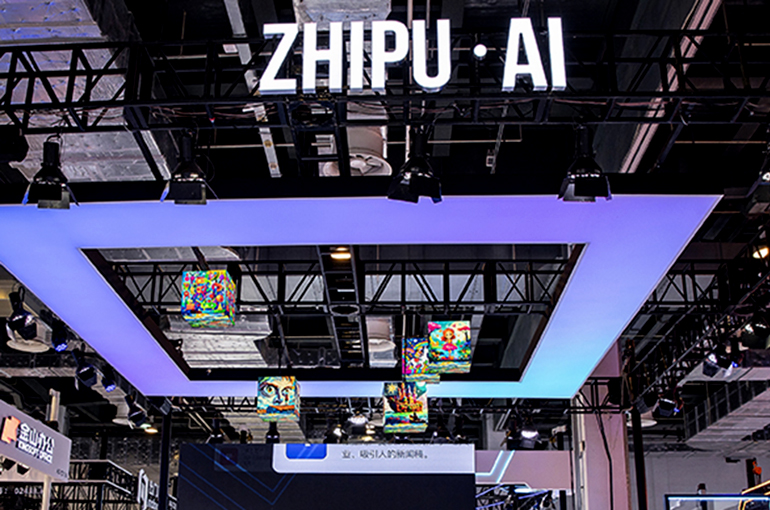
On February 21, Zhipu AI appealed for support from both domestic and international GPU providers following the release of its flagship GLM-5 model. The company acknowledged issues such as lack of transparency regarding usage policies, slow deployment of the new system, and a poorly designed upgrade process for existing users.
Analysts observed that Zhipu’s actions revealed a significant misalignment between its technical rollout pace, commercial goals, and operational readiness, which led to a decline in investor confidence.
The company also announced a more than 30 percent price increase for its Generalized Linear Model Coding Plan packages on February 12, driven by a surge in user demand.
Zhipu AI shares, which listed on January 8, jumped 15.9 percent to HKD649 but plummeted nearly 23 percent the next day from a February 20 high of HKD725.
Over the past three years, Zhipu’s net loss widened to CNY2.5 billion from CNY97 million (approximately USD361.9 million from USD14 million), according to its prospectus.
MiniMax reported accumulated losses of around USD1.3 billion in the last four years, including USD512 million in the first three quarters of the previous year.
The U.S.-based Anthropic, known as one of the fastest-growing AI firms globally, saw its annualized recurring revenue soar to USD14 billion this month from just USD100 million in 2023, boosting its valuation to USD380 billion during its most recent fundraising round.
Despite rapid progress, Chinese AI companies still face considerable challenges in commercialization and infrastructure development, beyond just improving model performance, analysts noted.
Data from the International Data Corporation indicated that only 17 percent of global enterprise AI procurement decisions last year were primarily influenced by benchmark scores. Instead, 68 percent focused on scenario adaptability, service reliability, and cost efficiency.
This year will be crucial for AI companies to demonstrate their ability to commercialize technologies, following three years of intensive model competition and application development, according to analysts from Kaiyuan Securities.
 ChatGPT
 Perplexity
 Gemini AI
 Grok AI