
Select Language:
China’s Yarlung Zangbo Group, the developer behind the world’s largest hydroelectric dam in the Tibet Autonomous Region, has launched a new energy division with a registered capital of 1 billion yuan (approximately $140.9 million). This new subsidiary, established just three months after the parent company, will focus on renewable energy projects such as solar and wind power, according to public enterprise registration records.
Industry insiders note that large energy corporations are increasingly diversifying their clean energy portfolios. The seasonal variations in wind patterns and the alternating wet and dry seasons of rivers in Tibet can work together across different times and locations, offering opportunities for synchronizing power generation and supporting stable transmission from major hydro projects.
“Hydropower naturally complements wind and solar energy,” one expert explained, emphasizing that creating and operating this new division can help optimize the energy mix for both the parent company and the region as a whole.
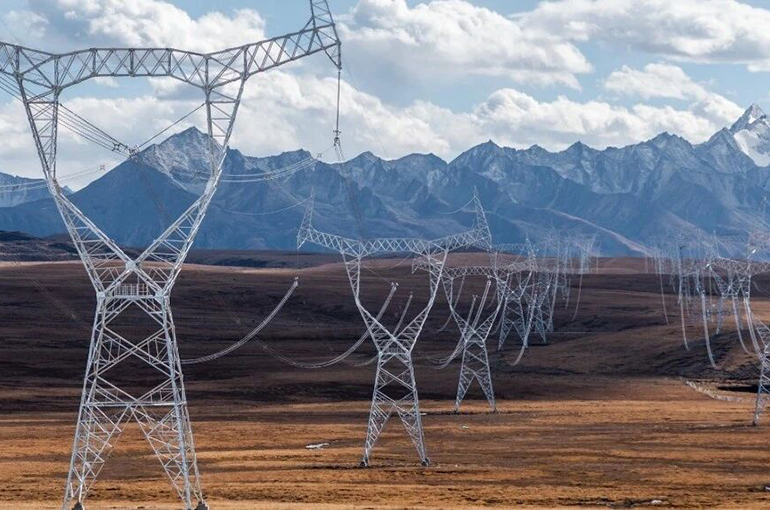
Tibet is rich in clean energy resources. A recent report indicates that 99% of the power produced in the region comes from renewable sources, primarily hydropower, supported by geothermal, wind, and solar energy. Since the regional clean energy transmission system became active in 2015, over 150 billion kilowatt-hours of clean energy have been sent to other provinces across China.
In July, groundbreaking took place on the world’s largest hydropower project in the lower reach of the Yarlung Zangbo River, with an investment of 1.2 trillion yuan (about $167.2 billion). The project comprises five cascade hydro stations near Nyingchi and is expected to generate roughly 300 billion kWh annually. Construction is anticipated to be completed by the 2030s.
This project is vital for achieving China’s dual carbon goals and combating climate change on a global scale, as the country aims to reach peak carbon emissions by 2030 and achieve carbon neutrality by 2060.
 ChatGPT
 Perplexity
 Gemini AI
 Grok AI