Select Language:
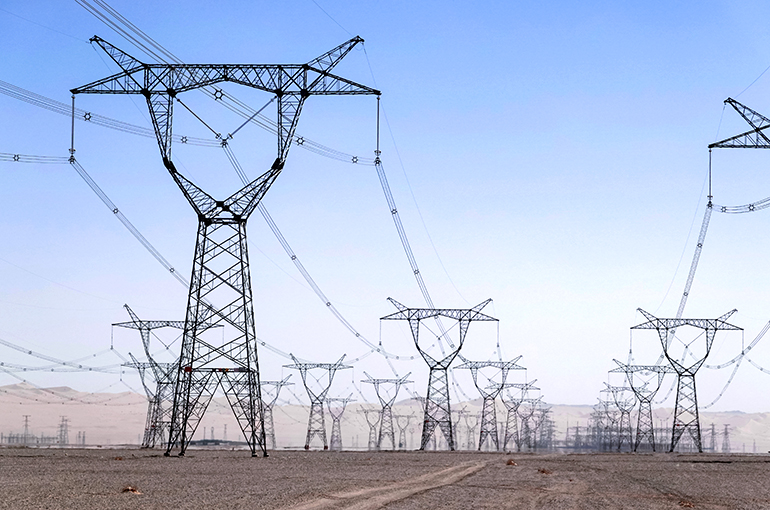
In the first quarter, investment in China’s power grid infrastructure accelerated significantly, with the country’s two leading grid operators collectively investing approximately 167.5 billion yuan (around $24.5 billion) in fixed assets. This amounts to an average daily investment of over 1.8 billion yuan (about $260 million), highlighting a robust push for infrastructure expansion to bolster economic growth and facilitate the transition toward cleaner energy sources.
This increase indicates that China’s power grid development is entering a new and peak phase. One of the major operators invested nearly 130 billion yuan (roughly $19 billion) in fixed assets during this period—a year-over-year rise of approximately 37%. Meanwhile, the other invested about 38.5 billion yuan (around $5.6 billion), representing nearly a 50% growth compared to the previous year, based on separate disclosures from each company.
The operator reports the initiation of 393 new power grid projects at voltage levels of 110 kilovolts and above in the first quarter, alongside 579 projects that were completed and put into operation. These figures reflect increases of 42% and 24%, respectively, from the previous year. The faster rate of new project launches compared to completions suggests continued high levels of infrastructure development in the coming months.
Supporting green energy and low-carbon initiatives remains a primary focus of this investment wave. More than 10 billion yuan (over $1.5 billion) was allocated to new energy grid connection projects in the first quarter—an increase of over 50% year-over-year—to ensure the timely integration and consumption of electricity generated by large-scale renewable energy installations such as solar and wind farms.
Additionally, investments in the distribution network totaled about 56.8 billion yuan (around $8.3 billion), mainly aimed at upgrading urban and rural power systems and accommodating rising demands for distributed energy resources and electric vehicle charging infrastructure.
Looking ahead, a five-year investment plan signals an unprecedented expansion phase. It is projected that total fixed-asset investments by the main grid operators will reach approximately 4 trillion yuan (roughly $586 billion) from 2026 through 2030—an increase of around 40% compared to the previous five years. During the same period, investments by another major grid company are expected to approach one trillion yuan.
Their strategic investments will focus on four key areas: ultra-high voltage transmission, smart distribution networks, advanced energy storage solutions, and the integration of the power grid with computing infrastructure.
Together, these entities are expected to channel nearly 5 trillion yuan (about $736 billion) into fixed assets over the five-year span, with average annual investments nearing one trillion yuan. This marks a shift toward a new era of power grid development characterized by multi-trillion-yuan investments each year.
Large-scale power grid development involves extensive industry linkages and can generate significant multiplier effects. Such investments not only accelerate technological and physical progress but also help stabilize the broader economy. As a vital component of the energy transition, heavy investment in grid infrastructure is crucial for removing transmission bottlenecks, ensuring the efficient use of clean energy, strengthening energy security, and supporting China’s broader green and low-carbon economic transformation.
 ChatGPT
 Perplexity
 Gemini AI
 Grok AI