
Select Language:
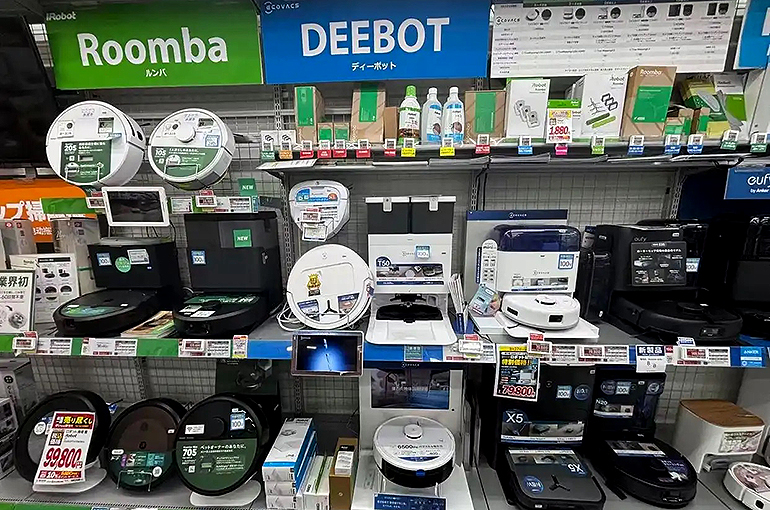
Chinese contract manufacturer Picea Robotics has agreed to acquire iRobot after the world’s leading robot vacuum producer and owner of the Roomba brand filed for bankruptcy amid increasing competition from Chinese rivals.
The company announced on December 14 that it reached a restructuring support agreement with its secured lender and primary manufacturing partner, Picea. According to the agreement, the Chinese firm will convert its debt claims into full ownership of iRobot through a court-supervised process.
iRobot has filed for a pre-packaged Chapter 11 bankruptcy in Delaware, anticipating the process will be completed by next February. The restructuring aims to reduce debt, ensure ongoing operations, continue product development efforts, and protect its global business.
This deal is expected to bolster iRobot’s financial stability. The CEO stated, “By merging iRobot’s innovation, consumer-focused design, and R&D with Picea’s expertise in innovation, manufacturing, and technology, we believe iRobot will be well-positioned to lead the next phase of smart home robotics.”
Last month, Picea acquired $190.7 million of iRobot’s debt from a U.S. investment firm, making it the company’s largest creditor when combined with the $161.5 million owed in manufacturing costs. The company has also extended its covenant waivers until January 15.
Once finalized, iRobot will become a wholly owned subsidiary of Picea, and its shares will no longer be publicly traded on the New York Stock Exchange or any other stock exchange. If the court approves, current shareholders will not retain any ownership, as all existing shares will be canceled.
Legal procedures and debt resolutions must be completed before the companies can integrate and boost competitiveness, according to an industry insider. The acquisition provides Picea an opportunity to acquire a well-known brand, aiding its transition from a contract manufacturer to a company with its own brand—potentially leading to higher profit margins.
However, there remains some uncertainty about Picea’s ability to acquire iRobot’s brand and distribution channels, given the complexities of international trade and current market conditions. Nevertheless, the acquisition would enable Picea to prioritize recovering the significant debt owed to it.
If everything proceeds smoothly, Picea could significantly reshape the competitive landscape of the global and U.S. robot vacuum markets, with iRobot commanding approximately 20 to 30 percent of the North American market share, according to industry sources.
Founded in 2002, iRobot introduced the first Roomba robotic vacuum and has sold millions worldwide. Its product lineup includes advanced technology in cleaning, mapping, and navigation.
Picea operates R&D and manufacturing facilities in China and Vietnam, employing over 7,000 staff members and serving an international customer base. The company owns more than 1,300 patents globally and has sold more than 20 million robot vacuums.
 ChatGPT
 Perplexity
 Gemini AI
 Grok AI