
Select Language:
Once primarily known as clearance centers, outlet malls in China have evolved into multifaceted destinations that blend shopping, leisure, family entertainment, and short-term vacations, reflecting changing consumer tastes.
This transformation coincides with ongoing sector growth. From July 2024 to June 2025, 205 high-quality outlet projects across the country reported combined sales of approximately CNY 180 billion (around USD 26.2 billion), marking a 9 percent year-over-year increase. During the same period, visitor numbers approached 900 million, representing nearly a 13 percent rise, according to data from the outlets division of the China General Chamber of Commerce.
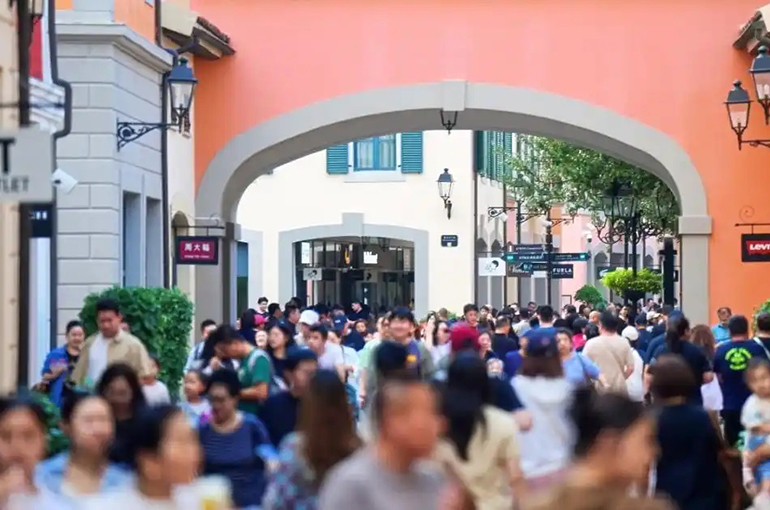
Compared to traditional shopping malls, Chinese outlet centers tend to be larger, featuring unique architectural styles and diverse street layouts designed to create immersive, sometimes exotic, atmospheres. Unlike downtown malls, outlets prioritize experiential shopping, offering superior service, extensive facilities, and varied entertainment options.
A shopper from Shanghai, who regularly visits outlets, shared with us that offline shopping holds “irreplaceable advantages and appeal” over online shopping. For many, a visit to an outlet mall feels like a “mini-vacation,” akin to a day trip to the suburbs. They cited spacious layouts, distinctive architecture, and kid-friendly play areas that appeal to the whole family as reasons for the attraction.
Despite increasing visitor numbers, engagement levels differ significantly among stores. During a recent visit to a major outlet in Shanghai, it was observed that many luxury discount stores remained relatively quiet, while popular sportswear brands such as Lululemon, The North Face, On Running, Kolon Sport, and Descente drew lines of customers eager to get in.
Aside from offering discounts, some domestic sports brands are strategically using outlet stores. An employee from a Chinese sportswear company explained that, unlike many international brands that primarily use outlets to clear excess inventory and boost traffic, local brands see outlets as vital for testing new products and expanding their market reach. They often sell discounted items, but also launch exclusive colorways and limited-edition products available only at outlets, which attracts more consumers.
Zhang Wei, a senior channel executive at Li-Ning, previously stated at a consumer forum that outlets are no longer simply “distribution channels” for products. Instead, they have become platforms for offering consumers a new lifestyle experience.
 ChatGPT
 Perplexity
 Gemini AI
 Grok AI