Select Language:
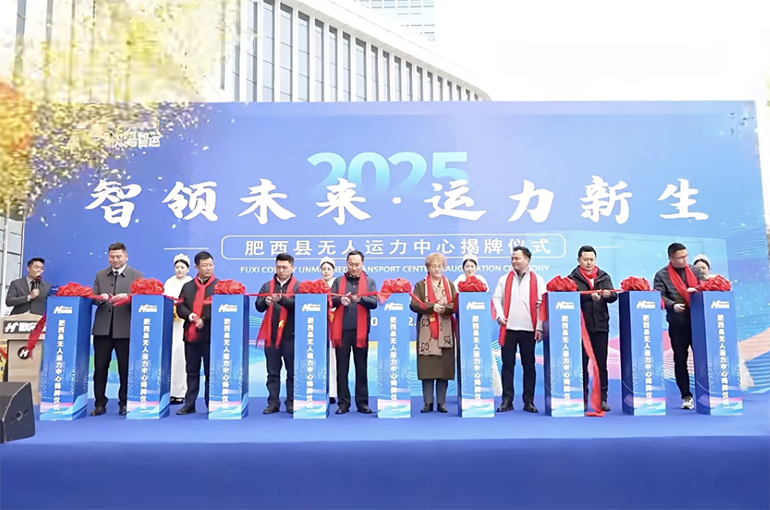
The first autonomous freight hub in China has officially begun operations in Hefei, the capital of eastern Anhui Province. The facility aims to reduce logistics expenses for users and boost profitability through the widespread use of driverless logistics vehicles.
This center utilizes Level 4 autonomous vehicles tailored to specific scenarios and can manage the entire logistics process from route planning to unmanned delivery. According to the company’s technology and operations director, it can perform automated tasks across the entire supply chain.
As China’s debut hub dedicated to large-scale commercial deployment of autonomous urban delivery vehicles, this facility combines various smart services. These include autonomous logistics solutions, high-precision mapping, cloud-based real-time dispatching, remote monitoring, data analysis, and vehicle maintenance management.
Unlike earlier autonomous transport systems limited to enclosed environments, this center operates throughout the entire city and serves diverse delivery needs such as express parcel delivery, campus logistics, and logistics within parks.
The launch of this center is expected to expand the scale of driverless delivery services. The increased efficiency is anticipated to benefit the demand side financially by making such services more viable. The primary goal is to make autonomous logistics profitable.
Positioned as a “transportation service provider,” the center offers on-demand autonomous transportation solutions. Businesses with delivery requirements in Hefei no longer need to own and maintain costly autonomous vehicles, as they can access these services through the center.
This “transport capacity as a service” model reduces entry barriers for companies to adopt advanced logistics technologies. For industries like e-commerce, retail, and manufacturing, utilizing these autonomous services could cut overall logistics costs by approximately 60%.
Hefei has successfully conducted extensive testing and demonstrations of functional autonomous vehicles. While demand for driverless vehicles exists across the city, many challenges remain in their application, an industry insider reported.
To remain competitive, Hefei must continue refining the technology and management models for driverless vehicles in practical scenarios. Experts believe that continued innovation is crucial for maintaining its leadership position.
China’s market for low-speed autonomous vehicles is projected to surpass 47,000 units this year, generating approximately 18.5 billion yuan (around $2.62 billion) in revenue. By 2030, sales are expected to reach 95,000 units, with revenues exceeding 41 billion yuan.
 ChatGPT
 Perplexity
 Gemini AI
 Grok AI