
Select Language:
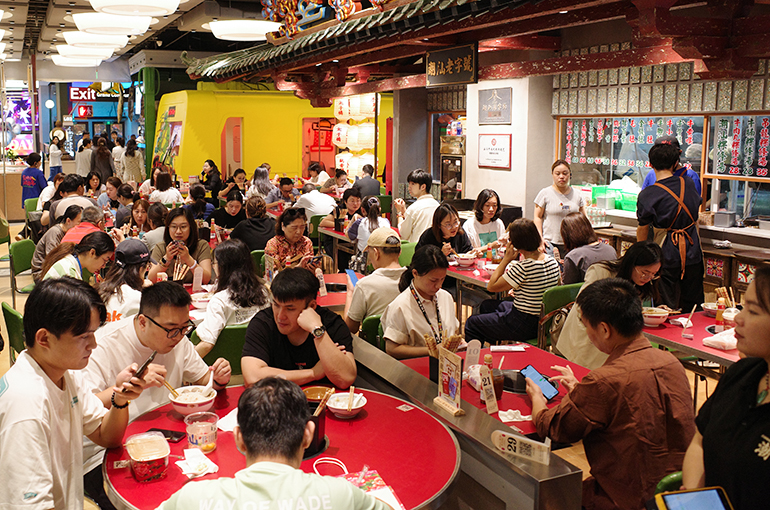
Total revenue in China’s food service industry increased for the third straight year, driven by robust growth in the first half of the previous year.
Last year, the industry’s sales rose by 3.2%, reaching CNY 5.8 trillion (approximately USD 834 billion), according to recent data from the National Bureau of Statistics. The sector’s contribution to overall retail sales of consumer goods grew slightly, accounting for 11.6% compared to 11.4% the year before.
The market experienced significant growth during the first half but stabilized in the second half, with growth rates gradually tapering off, according to the China Cuisine Association.
Furthermore, larger catering companies—those with annual revenues of at least CNY 20 million (around USD 2.9 million)—faced increased pressures. Challenges included regional disparities in policy enforcement, heightened competition fueled by platform subsidies, and other factors. These pressures resulted in growth rates below the industry average over several months, signaling ongoing adjustments and structural improvements within the sector, the association noted.
Smaller establishments focusing on fresh ingredients and minimal processing are increasingly favored by consumers. The World Federation of Chinese Catering Industry highlighted a rising demand for standardization, professionalism, technical skills, and innovation within the industry.
The industry is also evolving towards greater diversification in consumption patterns and integrating automated kitchen equipment.
Last year saw vibrant activity across new business formats and product lines, with a clear focus on health and seasonal offerings. Beverage segments like tea and coffee ramped up innovation and attracted more capital investment, emphasizing health benefits and integration. Meanwhile, hot pot and barbecue continued to grow in popularity, reflecting ongoing consumer upgrades and awareness of market trends.
Catering enterprises actively adapted to shifting demands by enhancing product development, holiday promotions, and cultural elements. They expanded service scenarios through strategies such as integrating catering with cultural tourism, digitalization, and local livestreaming.
Activities centered around intangible cultural heritage, regional festivals, and similar initiatives infused cultural significance into the industry, enriching the customer experience and boosting brand value.
 ChatGPT
 Perplexity
 Gemini AI
 Grok AI