Select Language:
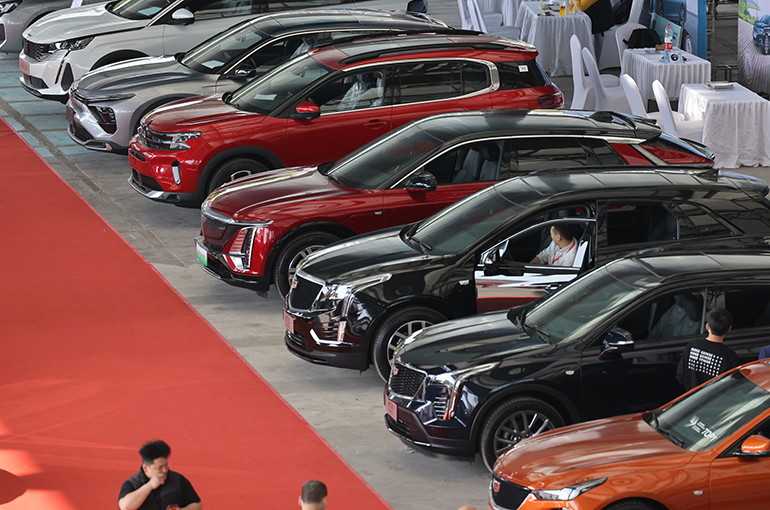
China’s automobile production, sales, and exports all reached record-breaking highs for the third consecutive month in July, as the intense price competition in the world’s largest auto market began to ease.
Vehicle manufacturing increased by 12% year-over-year, totaling approximately 2.23 million units last month, according to recent data from the China Passenger Car Association. Retail sales of cars went up by 6.3% to about 1.83 million units, while wholesale volumes climbed 13% to reach roughly 2.22 million vehicles. Exports, which include both complete vehicles and knock-down kits, surged by 25% to 475,000 units, marking a new monthly record.
In the emerging new energy vehicle (NEV) sector, retail sales rose 12% to nearly 1 million units, and exports skyrocketed by 120% to 213,000, setting a new all-time high for a single month.
Leading automakers by sales included BYD, Geely, and FAW-Volkswagen. Geely experienced a significant growth with a 71% increase, selling 202,000 units. Meanwhile, BYD’s sales declined by 12% to 275,000 units, and FAW-Volkswagen saw a slight decrease of 2.9%, selling 111,000 units.
Tesla, based in the United States, failed to enter the top 10 in sales rankings. The general secretary of the association cited multiple reasons for this, pointing out that domestic brands have achieved notable advances in innovation and smart technology, sometimes surpassing Tesla in product appeal.
Tesla’s sales have been affected due to tense trade relations with the U.S., along with Elon Musk’s close connections to the Trump administration, which have led to consumer boycotts overseas.
Furthermore, the industry has been shifting away from aggressive price wars, benefiting the entire supply chain and boosting overall profitability. In June, profit margins for the sector reached a high of 6.9%, indicating healthy growth.
Stable pricing has also increased consumer confidence. Coupled with supportive government policies, this has helped sustain robust demand for vehicles. Consumers now seem more interested not only in getting the lowest prices but also in market stability.
Looking ahead, the planned reduction of NEV purchase tax exemptions from 10% to 5% in the coming years is expected to stimulate demand before the new policy takes effect.
 ChatGPT
 Perplexity
 Gemini AI
 Grok AI