
Select Language:
Shares of a Chinese display technology company surged to the daily trading limit following a preliminary ruling by the U.S. International Trade Commission, which determined that the company’s core substrate glass formula does not infringe upon patents owned by a leading industry competitor. This decision could potentially open the U.S. market for the company’s products.
The stock rose 10% to CNY6.38 (approximately $0.90), pushing its market value to around CNY22.9 billion (roughly $3.4 billion). According to the company’s legal counsel, the preliminary ruling confirms that their independently developed “616” substrate glass formula does not violate the patent rights of the competitor.
This development might have significant implications for China’s display materials sector by reinforcing the legitimacy of domestically produced substrate glasses in the American market. It also reflects the progress Chinese manufacturers have made in reducing dependence on foreign suppliers for essential materials, an insider noted.
The legal dispute began in late 2024 when the U.S. tech giant filed a complaint, accusing nearly ten display producers—including this company, TCL China Star Optoelectronics, and HKC Corporation—of patent infringement related to substrate glass formulas under Section 337 of the Tariff Act of 1930.
Substrate glass, a critical raw material in display manufacturing, has long been dominated by American and Japanese companies, with the industry heavily reliant on firms like Corning, AGC, and Nippon Electric Glass—Corning alone controls over half the market. Recently, however, Chinese manufacturers have accelerated efforts in independent research and production, challenging the overseas duopoly.
Historically, the price of LCD televisions in China exceeded CNY10,000 (about $1,460), with substrate glass constituting the largest portion of production costs. As Caihong began producing its own domestically developed substrate glass at scale, international supplier prices gradually fell. Now, similar LCD models are often sold for around CNY3,000 (about $440), an insider explained.
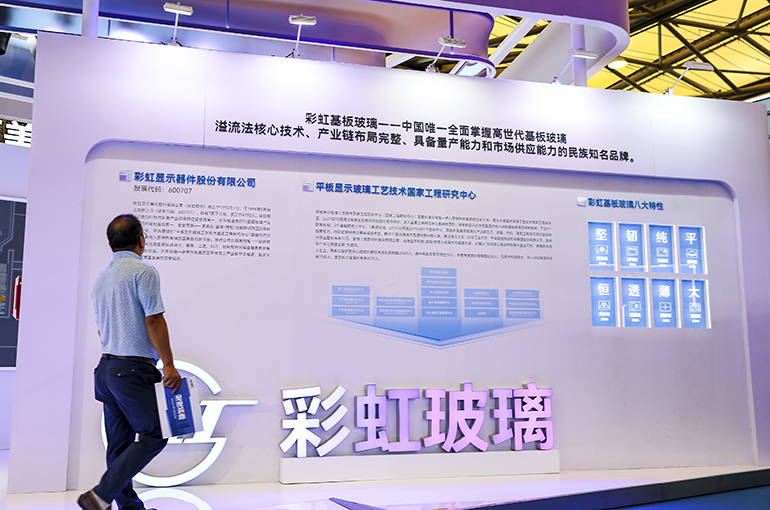
Founded in 1992 and based in Xianyang, Shaanxi Province, the company operates four substrate glass manufacturing plants, covering product generations from G5 to G8.5. The company projected a net profit between CNY330 million and CNY390 million (roughly $48.3 million to $57 million) for the previous year, representing a 69-73% decrease due to declining TV panel prices, according to its January earnings forecast.
 ChatGPT
 Perplexity
 Gemini AI
 Grok AI