Select Language:
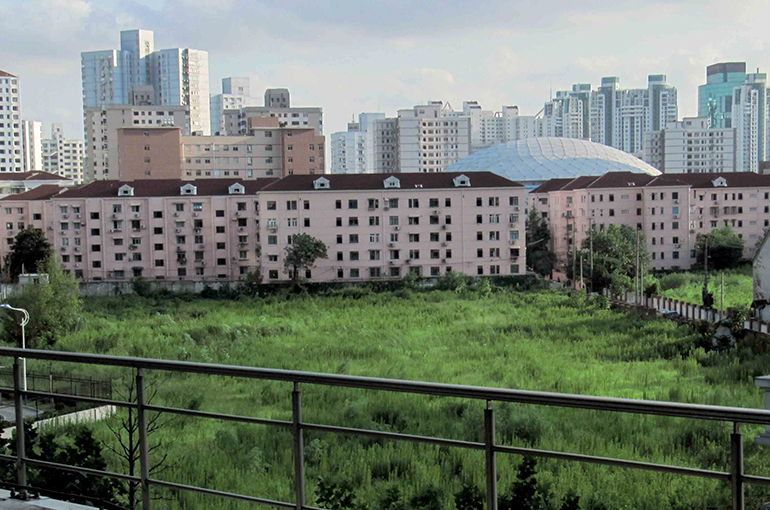
Chinese property developers are facing tough decisions on what to do with vast stretches of vacant land purchased at high prices before 2021. Developing these sites has become largely unprofitable today, complicated further by regulatory challenges and outdated project plans.
As of July 31, data shows that 27 major cities collectively had 22,000 hectares of residential land that hadn’t begun pre-sales, with around 9,000 hectares not even under construction. Most of this land was acquired during the peak of the land market before 2021, and now, few are willing to develop or purchase it.
“Developers prefer to take on low-cost contract construction projects instead of developing their own idle land,” said a manager at a defaulted builder in eastern China. Explaining their reluctance to speed up development, he noted that the company’s unused land remains an asset on paper, but developing it now would likely result in losses.
As of June 30, the firm managed over 400 hectares of undeveloped land, with just 12 hectares brought into construction in the first half of the year, according to its semi-annual report. At this rate, it would take approximately 16 years to develop the entire stock of vacant land.
Another defaulted developer controls more than 2,500 hectares of unused land, predominantly in second-tier cities, even though it hasn’t bought new plots in years. The company sold less than 100 hectares of properties in the first half of 2025 — enough to take 20 years to offload all its land reserves at the current pace.
“In the past, land was seen as a highly valuable asset,” said a manager from that builder. “Now, even creditors prefer finished properties that are easier to sell and monetize.”
Outdated project plans that no longer match current market demand also discourage development on pre-2021 land, the manager added.
According to regulations, land with development permits that haven’t begun construction within two years is considered idle, and local governments can revoke the development rights.
However, some cities lack the funding for land acquisitions, and others offer significantly lower prices when reclaiming idle land, explained a manager from a third defaulted builder. “This has discouraged developers from selling their land,” he said.
Complex debt arrangements have clouded land ownership rights, complicating efforts by local authorities to reclaim land, noted an official from a private development firm.
The extent of unused land varies across cities, and tailored local strategies are needed, said Ma Qianli, a researcher at the China Real Estate Information Corporation. Ma recommends that cities with high levels of land idling accelerate reclamation to bolster market confidence, while those with higher construction activity focus on ensuring steady home sales across both high-end and affordable segments.
For projects struggling with sales under their original plans, developers should be permitted to make moderate adjustments to boost sales, Ma suggested.
Flexible measures, such as relaxing planning and design standards, could help developers dispose of long-unused plots, one manager proposed.
“Many of these sites are located in newly developed urban areas, where some high-density projects were planned based on expected large population inflows that no longer match current market realities,” he explained.
 ChatGPT
 Perplexity
 Gemini AI
 Grok AI