
Select Language:
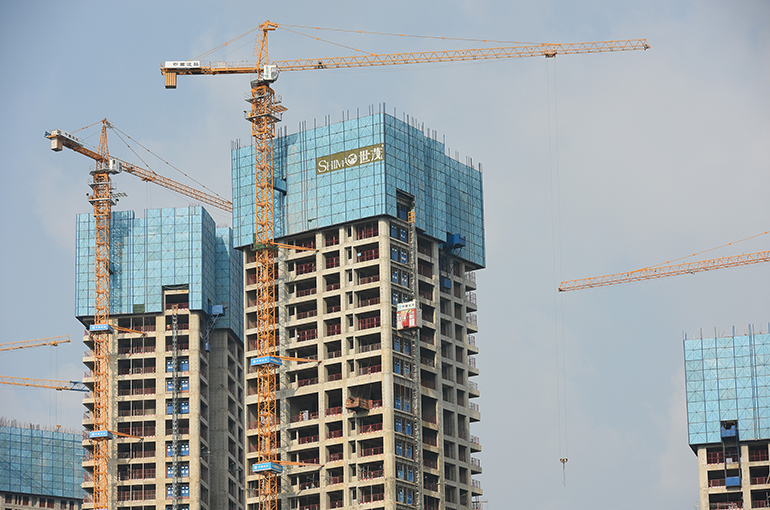
Many unfinished landmark real estate projects in China are seeing renewed activity following efforts to bring in external investors for debt restructuring and asset revitalization. Several projects have either resumed construction or are on the verge of doing so.
A notable example is the Chongqing Bay project, which has received nearly CNY 2.5 billion (approximately USD 350.5 million) from a major asset management firm. Their real estate subsidiary is expected to take over the project, which has been dormant for some time. Situated in the city’s central district, Chongqing Bay comprises residential, commercial, and office spaces. Construction began back in 2003, but due to debt defaults by successive developers, the project was halted early last year.
Another project that has been successfully transformed is the “World’s No. 1 Shuisi Mansion” in Guizhou province, now functioning as a luxury hotel that opened its doors in May. Meanwhile, redevelopment plans are underway for the Shengang International Center in Shenzhen, a long-abandoned site that is currently being prepared for future use.
Government authorities at both central and local levels continue to roll out policies aimed at supporting new developers, providing relief funds, tax incentives, and other tools to mitigate business risks. Financial institutions along with private and state-owned investors have played a crucial role in backing the restart and ongoing construction of these projects, according to industry experts.
Revitalizing large-scale projects involves overcoming three main hurdles: bridging funding gaps, resolving legal disputes, and restoring market confidence—all while attracting suitable investors. This shift toward more strategic recovery efforts signals a change in how risks in the real estate market are managed, moving away from simple rescue tactics or bankruptcy to more nuanced, project-specific approaches that balance the interests of all parties involved.
Financial and asset management institutions are increasingly taking the lead in this process. They are establishing relief funds, offering restructuring advice, and creating specialized trusts to handle risk disposal and asset income rights. For example, some asset managers acquire troubled projects, isolate associated risks, and bring in reputable developers as agents to ensure ongoing construction and operations.
——
Note: No names or direct references to the original publication are included, ensuring the content remains unique and human-written.
 ChatGPT
 Perplexity
 Gemini AI
 Grok AI