
Select Language:
China has announced plans to reduce the average cost of hydrogen for end-use to below CNY25 ($3.63) per kilogram by 2030, down from current levels exceeding CNY35 ($5.08). Some regions with advantages aim to bring the price down to approximately CNY15 ($2.18) per kg.
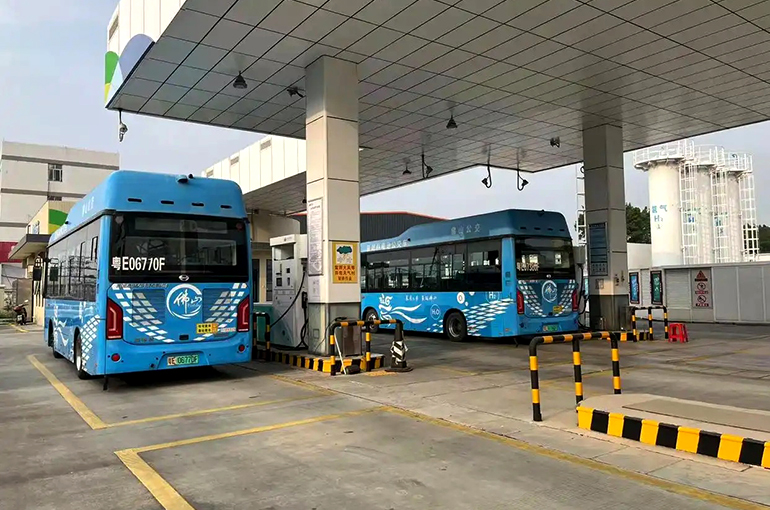
End-use hydrogen refers to the fuel required for vehicles, according to a joint notice issued recently by the Ministry of Industry and Information Technology, the Ministry of Finance, and the National Development and Reform Commission. At present, hydrogen prices for such vehicles in China generally stay above CNY35 per kg, with refueling costs ranging from CNY35 to CNY50 per kg even in key hydrogen industry hubs like Foshan, a city in Guangdong Province.
Achieving the CNY15 ($2.18) target would make hydrogen refueling costs comparable to charging electric vehicles, said several industry experts, including Li Cancheng, a former manager at a hydrogen refueling station in Guangdong. This breakthrough could remove the price barrier for large-scale hydrogen use and accelerate the sector’s growth.
Industry insiders believe that only when the price drops to CNY35 ($5.08) per kg can the operating costs of hydrogen vehicles become roughly equal to those of gasoline-powered cars. Reaching a price point of CNY15 ($2.18) per kg would allow hydrogen vehicles to directly compete with electric vehicles on cost.
A reduction to CNY15 ($2.18) per kg in hydrogen refueling costs would make the overall expenses of hydrogen vehicles comparable to EVs, according to industry analysts. With the added benefits of longer driving range and quicker refueling, market acceptance for hydrogen-powered cars is expected to rise further. Experts recognize that high hydrogen prices have long limited the widespread adoption of these vehicles and serve as a major obstacle to industry development.
To encourage the adoption of hydrogen cars, many local governments, including Foshan, have implemented subsidy programs for hydrogen refueling. However, these subsidies place significant financial pressure on local budgets.
Another key factor contributing to high prices is the limited supply of hydrogen. A government official in Guangdong noted that to maintain the normal operation of local hydrogen vehicles and meet other needs, there has been extensive coordination to secure hydrogen resources. The tight supply has directly contributed to the elevated prices faced by consumers.
 ChatGPT
 Perplexity
 Gemini AI
 Grok AI