Select Language:
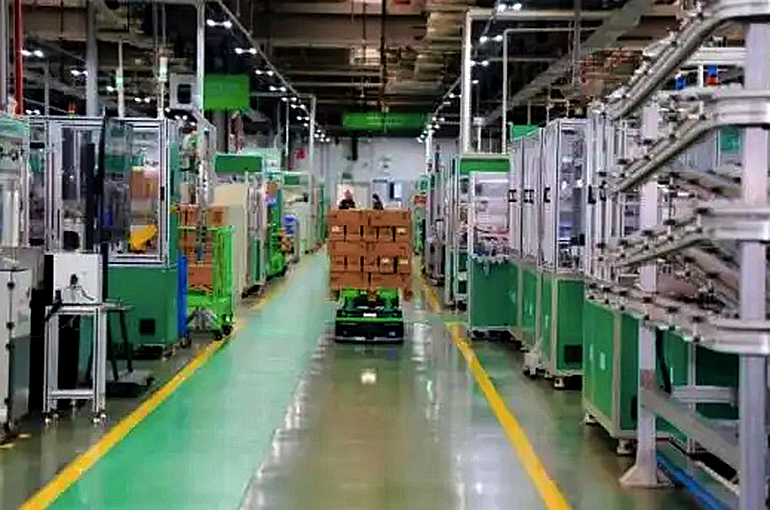
China leads the world with the highest number of lighthouse factories, according to the most recent update from the global Lighthouse Network. On January 15, sixteen new factories in China were added to the network, representing approximately 70% of all recent additions and increasing the country’s total to 101 lighthouse factories.
Established in 2018 through a partnership between a prominent international organization and a leading consulting firm, this network highlights top industrial sites that implement Industry 4.0 technologies at scale. These sites are recognized for their significant advancements in financial performance, operational efficiency, and sustainability by transforming factories, supply chains, and business models.
Last September, the original three award categories—Sustainability, Factory, and End-to-End Value Chain Lighthouses—were expanded into five new categories: Customer Centricity, Productivity, Supply Chain Resilience, Sustainability, and Talent.
Among the newly added lighthouse facilities in China are some funded by international corporations. Notable examples include the French energy management giant’s facility in Wuhan, the German optics company Zeiss in Guangzhou, the French tire manufacturer Michelin in Shenyang, the German industrial conglomerate Siemens in Nanjing, and the French automotive parts firm Forvia in Yancheng. These factories represent a strategic shift in foreign investment and demonstrate China’s rising importance within global supply chains.
Schneider Electric’s factory in Wuhan is one of only three Talent Lighthouses worldwide, recognized for its innovative talent training and empowerment programs specifically designed for the digital age. During a visit on January 21, a senior executive explained that the company’s focus is shifting from merely pursuing efficiency through lean and just-in-time manufacturing, to building resilient, green, and flexible supply chains amid a landscape marked by uncertainty. Talent development, digital integration including AI, and sustainable practices are now central to their strategy to drive innovation.
Foreign enterprises’ investments in China are driven not only by extensive market size but also by the unmatched efficiency of local supply chains. Offering tailored services that meet specific local demands has become essential to maintaining their competitive edge globally.
Zeiss’s Guangzhou plant utilizes advanced technologies such as machine learning, digital twins, and intelligent agents to personalize optical lenses based on customer age, vision needs, and lifestyle. This technological approach has enabled the factory to increase personalized product offerings by 400%, reduce delivery times by 29%, achieve over 98% on-time delivery, and reach a customer satisfaction rate of 99%.
Michelin’s plant in Shenyang, awarded the Production Efficiency Lighthouse title, has expanded its portfolio of electric vehicle tires by over 340%, now exceeding 250 specifications. The factory has also lowered minimum order quantities by 71% and shortened trial production cycles by 51%. This development reflects a shift from local manufacturing to a global, intelligent manufacturing hub—driving China’s industrial upgrade, according to the company’s leadership.
Achieving recognition within the Lighthouse Network affirms Michelin’s more than 30 years of committed development and innovation in China.
In the first 11 months of the previous year, over 61,200 new foreign-invested enterprises were established in China, representing a 17% increase from the previous year. Moreover, foreign investment actually utilized in China surged by 26% in November, particularly in sectors like AI, the digital economy, and green development, despite a general slowdown in global cross-border investment.
 ChatGPT
 Perplexity
 Gemini AI
 Grok AI