
Select Language:
China has unveiled its initial set of nine pilot initiatives focused on green liquefied fuels, marking a step forward in environmental sustainability efforts. These projects, which harness renewable energy sources to produce eco-friendly fuels, comprise five for methanol, three for ammonia, and one for ethanol, according to a recent government notice. The majority of these projects are situated in northeastern China, a region rich in renewable resources, with one located in the country’s economically advanced eastern region.
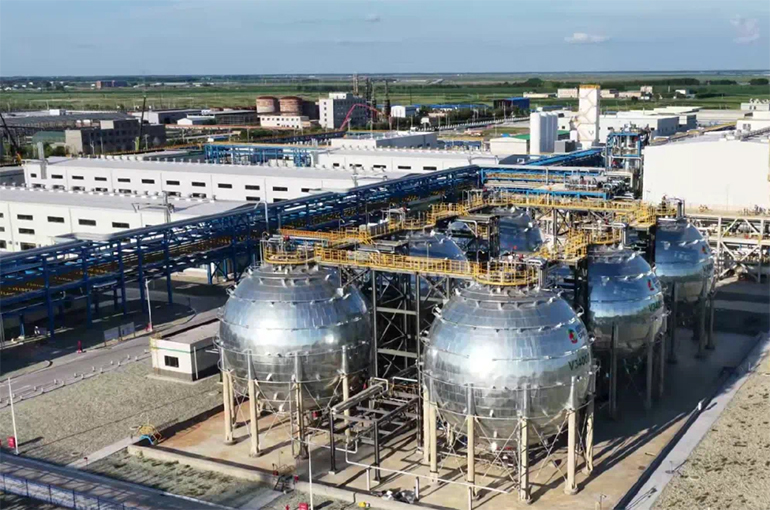
This initiative aligns with China’s broader climate commitments, including peaking carbon dioxide emissions by 2030 and achieving carbon neutrality by 2060. A significant portion of these projects utilize green hydrogen as a foundational element to manufacture green chemicals. The process begins with generating green hydrogen via electricity from solar or wind power, which then serves as a raw material for producing methanol, ethanol, and synthetic ammonia—substituting traditional fossil-based inputs. For example, a project in Da’an, Jilin province, operated by a major power company, employs local wind and solar energy to produce green hydrogen and ammonia.
An industry insider highlighted that large-scale hydrogen-based energy projects like these are pioneering new models for on-site green power utilization. As a result, the future demand for green hydrogen, methanol, and ammonia will significantly impact regional capabilities to leverage wind and solar energy.
However, limited market demand remains the primary challenge hindering further growth. Industry analysis indicates that although recent green ammonia projects have secured supply contracts both domestically and internationally, a large portion of planned capacities still lack buyers, creating market uncertainties.
Cost is another major barrier to expansion. An executive from a prominent shipping innovation center explained that green methanol’s lower calorific value compared to fossil fuels means it can only be price-competitive if it drops below USD 300 per ton—significantly below current production expenses.
Reducing costs continues to be a vital industry goal. Many of the newly announced projects intend to utilize electricity during off-peak hours to minimize expenses and improve economic viability.
 ChatGPT
 Perplexity
 Gemini AI
 Grok AI