
Select Language:
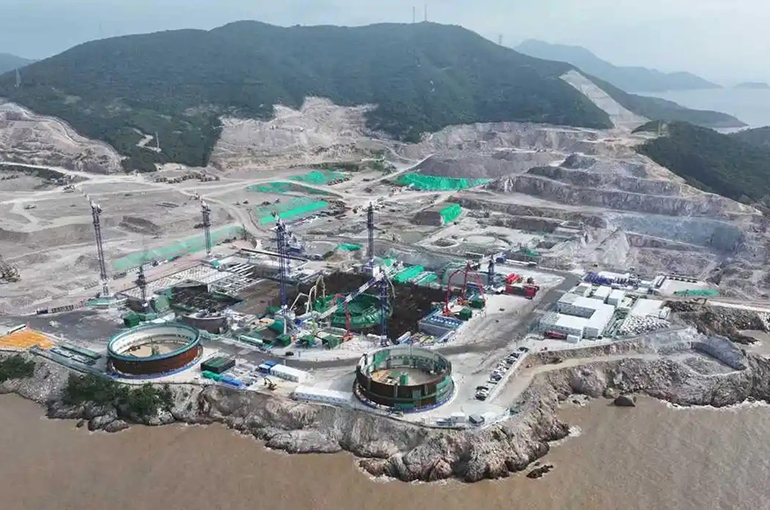
Construction of China’s fourth nuclear power plant in Zhejiang Province has officially begun, aiming to enhance regional energy independence and support the country’s transition to cleaner energy sources.
Today marked the start of concreting at the first reactor of the Jinqimen Nuclear Power Plant in Ningbo. This project is backed by a state-owned enterprise, which has invested in building six Hualong One units, each capable of producing 1.2 million kilowatts and designed to operate for 60 years.
Hualong One, also known as HPR1000, is a third-generation pressurized water reactor technology developed collaboratively by Chinese nuclear authorities. Once fully operational, the plant is projected to generate approximately 55 billion kilowatt hours annually—enough to supply about half of Ningbo’s electricity needs last year. It is also expected to cut carbon dioxide emissions by approximately 45 million tons each year.
Zhejiang, ranking as China’s fourth-largest economy, faces significant energy demands but has limited fossil fuel resources. Historically dependent on importing electricity, the province is now seeking to leverage its coastal location to expand nuclear power development.
Zhejiang already hosts the nine-reactor Qinshan Nuclear Power Plant, with additional facilities under construction—two new plants, each comprising six reactors, are currently in progress in Sanmen and Sanao.
China is fast-tracking its nuclear power initiatives to replace fossil fuel dependence and achieve carbon neutrality goals. As of the end of last year, the country operated 58 nuclear reactors, ranking second worldwide after the United States, which has 94 units. Moreover, 27 new reactors are under construction, maintaining China’s leading position globally in nuclear infrastructure for 18 consecutive years.
 ChatGPT
 Perplexity
 Gemini AI
 Grok AI