Select Language:
On December 26, China’s leading drug regulatory authority approved a cancer medication developed by a domestic pharmaceutical company for use as a neoadjuvant therapy in colon cancer patients. This medication, used in combination with another monoclonal antibody, is designed for pre-surgery immunotherapy aimed at patients with resectable stage IIB to III MSI-H/dMMR colon cancer. It is the first and only dual-immunotherapy regimen approved globally for this purpose.
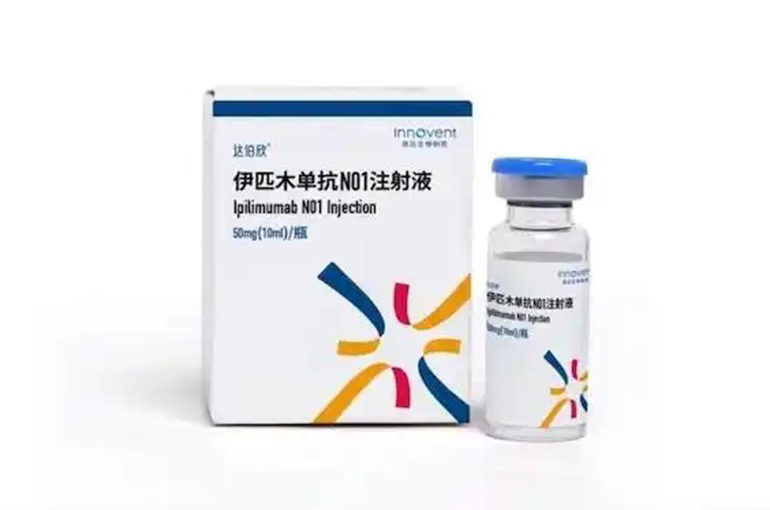
The drug, Ipilimumab N01 Injection, is also the first locally created anti-CTLA-4 monoclonal antibody to gain approval in China, according to the pharmaceutical company based in Suzhou. When paired with Tyvyt® (Sintilimab Injection), an innovative PD-1 inhibitor developed jointly by the company and Eli Lilly of the United States, this short preoperative treatment course can significantly boost the rate of complete pathological response—that is, the absence of viable tumor cells in the removed tissue. This can potentially allow many patients to skip postoperative chemotherapy.
This dual-immunotherapy approach mainly targets patients with resectable stage IIB to III colon cancer exhibiting microsatellite instability-high or mismatch repair deficiency. These patients generally respond poorly to chemotherapy, and roughly 10 to 30 percent still face recurrence or metastasis despite standard postoperative treatments. Chemotherapy side effects can also detract from patients’ quality of life.
The approval is expected to transform clinical practices and address a significant gap in colon cancer pre-surgical treatments in China, expanding benefits to more patients with MSI-H/dMMR tumors, according to a senior researcher involved in the project and a member of the Chinese Academy of Engineering.
“Performing radical surgery on advanced colon cancer can be challenging, invasive, and sometimes unsuccessful in completely removing tumors, which leads to a poorer prognosis,” stated Wang Feng, assistant to the president and head of the internal medicine department at the same cancer center. “The approval of this dual-immunotherapy regimen offers a new treatment option for these patients.”
Trading of shares for this pharmaceutical company was not available today, as the Hong Kong stock market was closed for Christmas.
 ChatGPT
 Perplexity
 Gemini AI
 Grok AI