
Select Language:
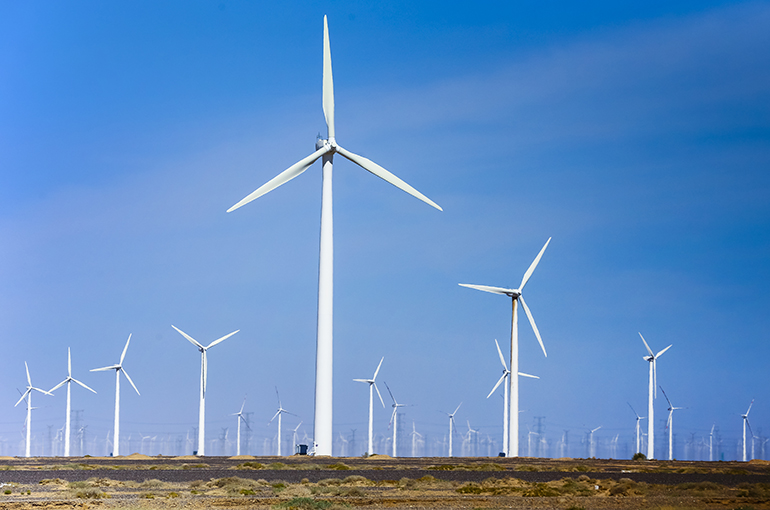
China is set to add over 200 million kilowatts of new wind and solar power capacity next year, reflecting a swift move toward a green and low-carbon energy revolution, according to the latest National Energy Work Conference. This growth aims to increase renewable energy’s share in the national energy mix while ensuring stability in energy supply. Alongside wind and solar, the country plans to systematically advance major hydropower projects, safely develop nuclear power, and optimize the use of fossil fuels in a cleaner, more efficient manner.
The main challenge in this transition is establishing a new energy system primarily powered by renewable sources like wind and solar. The primary obstacle remains the grid’s ability to absorb and effectively utilize the energy produced, noted Lin Boqiang, director of the China Institute for Studies in Energy Policy at Xiamen University.
To overcome these hurdles, national authorities released a policy in October that sets a clear timeline. By 2030, China aims to develop a coordinated, multi-tiered regulatory system for renewable energy consumption. The plan involves continuously meeting an increasing electricity demand mainly through new renewable generation, with a focus on safely integrating over 200 million kilowatts of new capacity annually.
The policy divides renewable energy development into five key areas: large-scale transmission from desert, Gobi, and wasteland-based wind and solar farms; integrated hydropower, wind, and solar projects; offshore wind farms; centralized projects within provinces; and distributed renewable energy initiatives. The approach emphasizes a more focused and strategic management of these sectors.
Additionally, China will continue to prioritize nuclear power development next year, in line with the 2024 Energy Law. During the 14th Five-Year Plan period (2021–2025), the country approved 46 new nuclear units, boosting capacity by 54.5 million kilowatts, with both operational capacity and annual power generation increasing by approximately 30 percent.
Currently, there are 112 nuclear power units either in operation or approved across mainland China, with a total installed capacity of 125 million kilowatts, making China the largest nuclear energy producer in the world.
The conference also highlighted key priorities, such as fostering independence in energy science and technology, ensuring reliable supply for households and industries, advancing energy reforms and legal frameworks, and expanding international partnerships.
 ChatGPT
 Perplexity
 Gemini AI
 Grok AI