
Select Language:
British fintech firm specializing in digital payments is now positioning payment systems at the heart of “agentic commerce,” as artificial intelligence agents begin to handle shopping and transactions on behalf of consumers. This development presents new opportunities for Chinese international merchants aiming for global growth.
This London-based company is collaborating with partners such as OpenAI, Visa, Mastercard, and Google to create standards for secure, AI-verified, tokenized transactions, as the industry anticipates a fundamental shift in online purchasing methods.
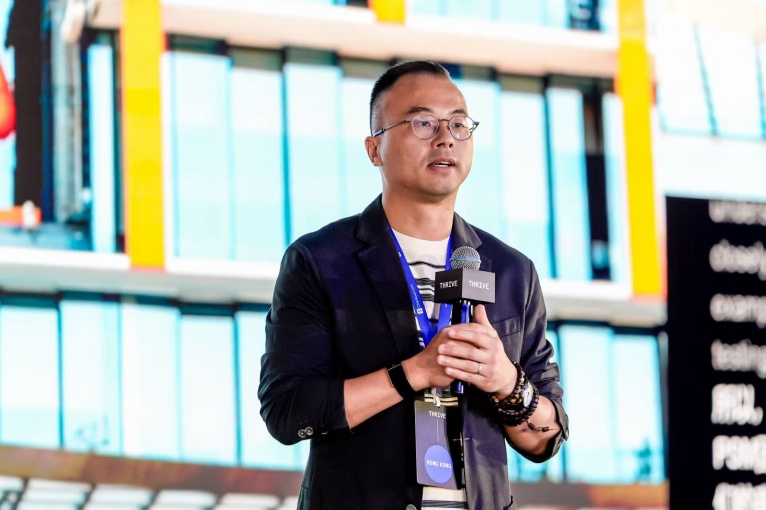
Last November, the firm adopted OpenAI’s Agentic Commerce Protocol, which allows AI agents to find products, make selections, and complete purchases directly within platforms like ChatGPT. The company’s China general manager noted before the recent second annual Thrive summit in Hong Kong that, “We are not just offering a service; we’re establishing a standard within this ecosystem. Payment is the most vital component of agentic commerce.”
As AI agents increasingly take over checkout processes, the company foresees emerging compliance and liability issues, especially concerning authorization, traceability, and fraud prevention. “Questions such as whether an order was confirmed by the user or made in error by the AI need a unified standard integrated into the payment infrastructure,” the executive explained. The firm estimates that AI agents could manage over 21% of household spending in five years.
The company entered China’s market roughly four years ago and has since built a customer base that includes rapidly expanding internet firms, cross-border e-commerce platforms, direct-to-consumer brands, and digital entertainment companies. In 2025, it processed over $300 billion in total payments, marking a 64% increase from the previous year.
“External pressures like geopolitics and tariffs have prompted Chinese merchants to broaden their horizons,” the general manager said. “Sticking to just one or two markets is no longer viable. A global perspective is essential.”
While early Chinese export efforts were heavily focused on the U.S. and Western Europe, the company now sees growing opportunities in the Middle East, Latin America, and Southeast Asia, each demanding tailored local payment methods, compliance approaches, and consumer preferences. This growing complexity is making payment strategy a key operational differentiator rather than just a routine service.
The firm advocates viewing payments as a source of revenue, not merely a cost. The perspective was illustrated using a sales funnel example, highlighting that friction points at checkout significantly reduce purchase completions. Many sales are lost because of inefficient payment flows, which can substantially impact e-commerce conversion rates.
“For businesses investing significantly in customer acquisition, these losses can be huge,” the executive said. “Optimizing the entire payment process—not just reducing fees—is where real value is created.”
The company’s AI-powered payment acceptance tool, trained on more than 20 billion global transactions, has helped clients such as Deliveroo boost payment success rates by up to 10 percentage points.
“Even a small improvement of half a percentage point or 1% in transaction success rates translates directly into increased revenue,” the executive added. “For large merchants, this difference is meaningful.”
Additionally, the executive pointed out a lack of professional forums in China where payment experts can exchange insights on data, strategy, and regulations. He referenced industry groups like the Merchant Risk Council in Western markets, which connect merchants, card networks, and regulators, as a model without a Chinese equivalent for outbound businesses.
To help address this gap, the company initiated the Thrive summit, moving it from Shaoxing to Hong Kong to facilitate deeper engagement between mainland Chinese merchants and international peers on topics like agentic commerce readiness.
At the event, the firm announced licensing approvals in the US, Japan, and Canada, alongside expanded operations in Brazil, underscoring its strategy to provide merchants with seamless global coverage through a unified platform.
“Everyone recognizes this transition is coming,” the executive said. “Most merchants, however, are still figuring out how to respond or mitigate the risks. That’s exactly the kind of discussion we need to foster.”
 ChatGPT
 Perplexity
 Gemini AI
 Grok AI