Select Language:
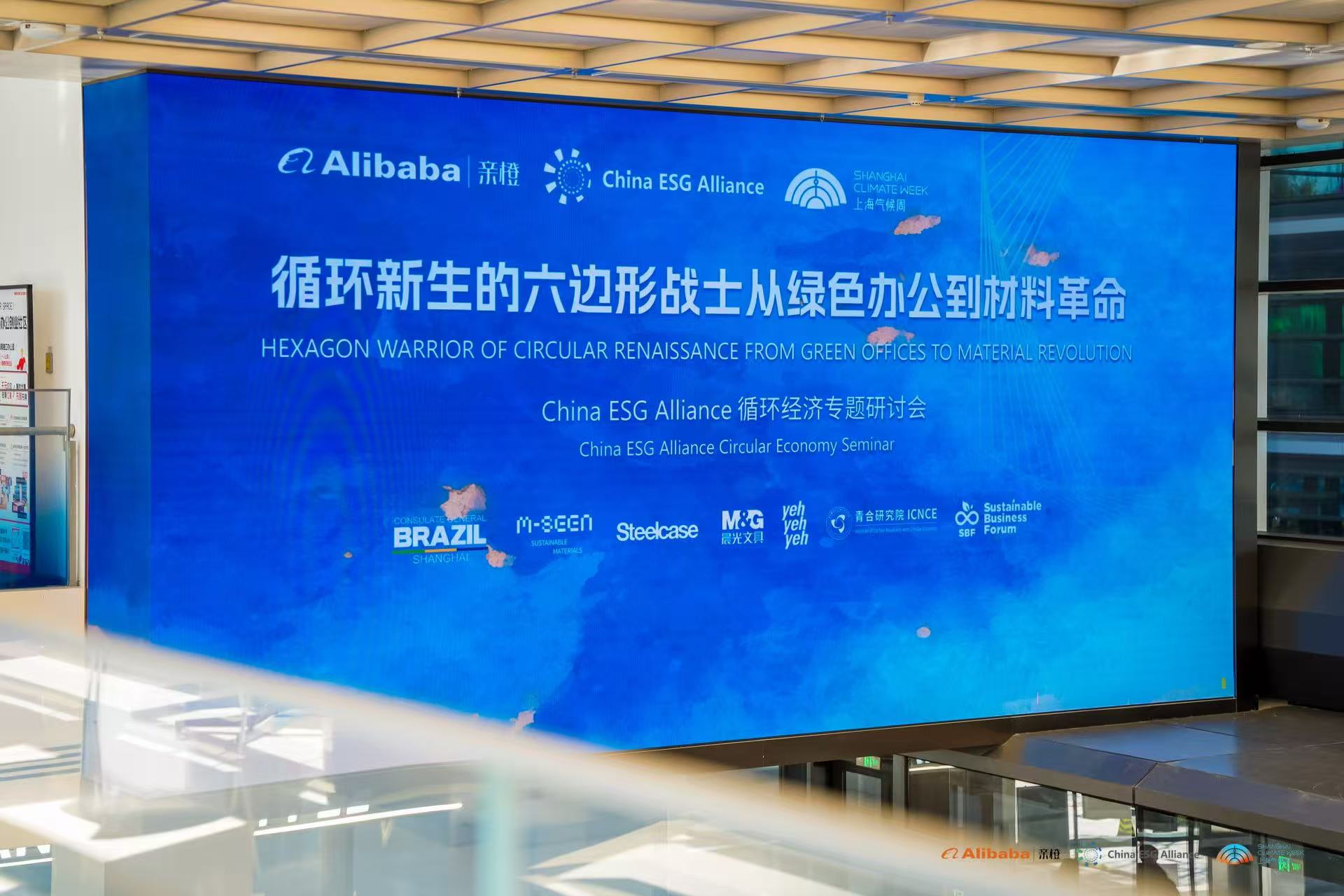
A diplomat from Brazil’s Consulate General in Shanghai, along with international business representatives and academics, participated in a seminar organized by a Chinese environmental, social, and governance alliance in partnership with a major Chinese e-commerce company. The event focused on sharing ideas and practices for sustainable development.
“Brazil and China have significant roles to play in discussions about energy transition and promoting responsible consumption and production,” stated Lucas Lima, the head of science, technology, and innovation at the Brazilian consulate, during the China ESG Alliance Circular Economy Seminar on December 3.
Established in April 2023, the alliance is a nonprofit organization dedicated to harnessing expert knowledge and industry resources to develop responsible climate solutions. Its members include global corporations such as Microsoft, L’Oreal, Lenovo, and Tencent.
Lima emphasized that collaboration in science, technology, and innovation is a crucial element of the strategic partnership between Brazil and China. “China is leading efforts in solar and wind energy infrastructure and has made remarkable progress in artificial intelligence and energy storage,” he said.
For instance, AI technology can assist in predicting and responding to climate emergencies and in monitoring deforestation. However, Lima highlighted that AI also consumes substantial energy and water, primarily in data centers, making it vital to find ways to minimize its environmental impact.
Brazil boasts one of the world’s cleanest energy profiles, with renewables like solar and wind generating over 88 percent of its electricity, Lima noted. He also shared that Brazil recently launched an initiative to raise $125 billion through loans and investments to prevent tropical forest loss worldwide, announced during the 30th United Nations Climate Change Conference in Belém last month.
A US company specializing in office furniture has committed to reaching net-zero carbon emissions by 2050. Gao Qi, a sustainability specialist, explained that the firm is lowering its carbon footprint by using eco-friendly materials and designing products to promote circularity. Since 2023, recycled content in their products increased from 20 to 41 percent, and their overall carbon footprint was reduced by 43 percent during the product lifecycle.
The company is also supporting one of its key Chinese clients, an online retail giant, in meeting their environmental targets. They aim to achieve carbon neutrality for Scope 1 and 2 emissions and halve the carbon intensity of Scope 3 emissions by 2030.
The company developed a new workstation model that can cut its carbon footprint by approximately 7 percent compared to the previous version, excluding packaging.
An aerospace and automation leader from the US is actively promoting sustainable aviation fuel made from biomass sources like kitchen waste and agricultural leftovers. Eva Lu, senior business development manager at Honeywell’s chemical division, explained that using sustainable aviation fuel (SAF) can reduce lifecycle carbon emissions by up to 80 percent compared to conventional jet fuel.
China launched a pilot program last September to use SAF at four airports—Beijing, Chengdu, Zhengzhou, and Ningbo—and has since expanded this initiative to additional airports. Honeywell’s partner in China, Jiaao Enprotech, built a plant in Lianyungang to produce 370,000 tons of SAF annually from waste oil. Lu added that China’s aviation sector is projected to demand around 20 million tons of SAF per year by 2030 as the country advances toward its carbon neutrality goals.
 ChatGPT
 Perplexity
 Gemini AI
 Grok AI