
Select Language:
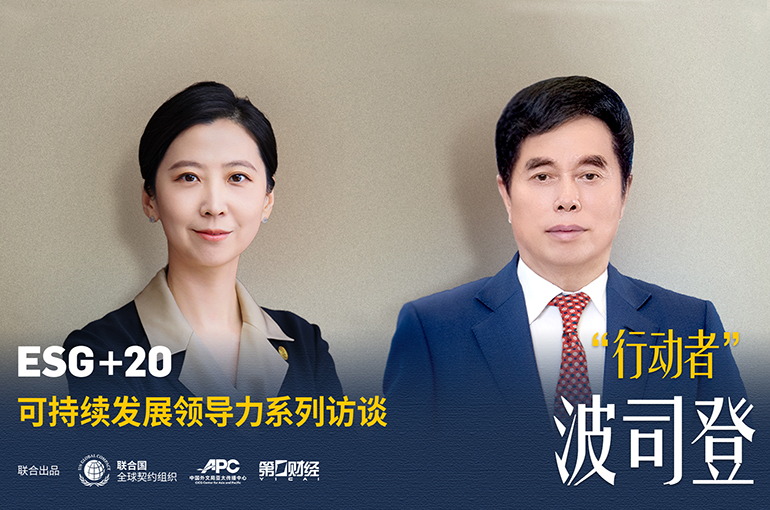
In 2024, marking the 20th anniversary of the concept of ESG (Environmental, Social, and Governance), the United Nations Global Compact, the Asia-Pacific Center at China International Communications Group, and a global financial news outlet collaboratively launched the ESG+20 Sustainable Development Leadership Interview Series. This initiative features dialogues with twenty entrepreneurs and on-site visits to gauge how Chinese companies are advancing sustainable development and corporate social responsibility, highlighting their insights and accomplishments.
In one interview from the series, Gao Dekang, founder and chairman of Bosideng International Holdings, shared that after fifty years of entrepreneurial experience, he has come to realize that a company’s true value lies in its ability to resonate with the times, and the vitality of a brand hinges on its growth alongside society.
Bosideng, which has specialized in down jackets for nearly a decade, has actively incorporated itself into the global governance framework amid worldwide efforts towards green, low-carbon development. As a participant in the United Nations Global Compact, the Shanghai-based company has integrated sustainable development into its core business strategies. Its manufacturing process of down jackets reflects a narrative of China’s sustainable fashion industry, offering scalable and repeatable solutions for global industrial transformation.
Gao emphasized that sustainable company development depends fundamentally on strong leadership, involving profound internal change and a long-term vision. Additionally, external collaboration and ecosystem co-creation are vital. Lastly, active participation in global standards and contributions is essential.
Regarding ESG strategies, Gao explained that Bosideng has adopted a “1+3+X” strategic framework, aligning with its vision of being a consumer-focused leader in sustainable fashion and aiming for net-zero emissions by 2038. The company has embedded sustainability into its strategic planning and daily operations through a performance-based incentive system that links ESG outcomes to executive pay. Dual assessment mechanisms help identify key developmental challenges, ensuring that ESG principles are woven into decision-making, execution, and oversight processes. This approach has earned Bosideng recognition from international financial markets, with the company achieving the highest AAA ESG rating from the global index provider MSCI—an unprecedented feat within Asia’s textile and apparel sector.
Bosideng also understands that sustainable growth relies on ecosystem collaboration. It has put in place a comprehensive ESG management system for its supply chain, establishing strict codes of conduct for suppliers, adopting green certification processes, and prioritizing procurement from certified partners. The company developed a digital platform for supply chain ESG management, achieving full traceability of ESG performance for its key suppliers. Regular training programs are conducted for suppliers, and partnerships are formed across the supply chain to promote eco-friendly fabrics and upgrade raw materials sustainably. These efforts collectively foster a low-carbon, circular, and responsible industrial ecosystem driven by positive incentives.
Looking ahead, Gao expressed confidence that Bosideng will hit its net-zero emissions target by 2038. He stated that by then, the brand will be recognized not only for its warmth and fashion but also for its leadership role and concrete actions in championing sustainable fashion and climate change initiatives on a global scale.
 ChatGPT
 Perplexity
 Gemini AI
 Grok AI