
Select Language:
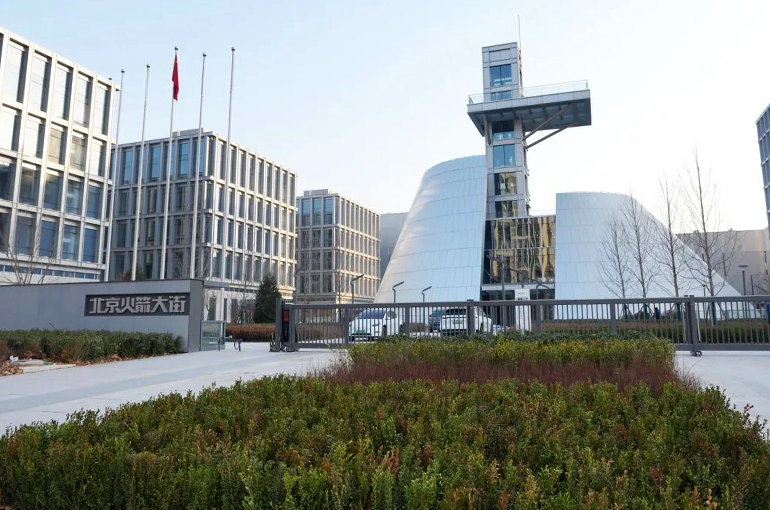
The Beijing Rocket Street project officially opened its doors, becoming China’s first collaborative scientific research and manufacturing hub dedicated to the commercial aerospace industry. Situated in the Beijing Economic-Technological Development Area, this facility spans 145,000 square meters and consists of four primary zones: a shared technology platform, an innovation R&D center, a high-end manufacturing hub, and an exhibition and operations control center.
The design of the industrial park is centered around a key concept: “upstream and downstream are interconnected,” highlighting the seamless integration of various stages within the commercial aerospace industry. In the future, Rocket Street will provide over ten shared services for resident companies, including satellite and rocket testing, smart manufacturing systems, and integrated space-ground operation controls. These services will cover vibration testing, thermal vacuum tests, electrical and static tests, separation testing, and scientific research and production support such as 3D printing and dependable component supply.
A representative from a local rocket company mentioned that Rocket Street offers access to publicly available resources, eliminating the need for companies to travel long distances or wait in line for testing facilities. This approach allows firms to allocate more resources toward developing new products, enhancing overall operational efficiency and technical capabilities within the park.
Previously, many aerospace companies had to develop their own testing facilities and structural component manufacturing plants, which resulted in high operational costs and limited productivity. The new shared facilities are designed to streamline this process, reducing costs and increasing work efficiency.
The commercial aerospace sector is a major focus within the Beijing Economic-Technological Development Area, hosting over 180 companies, including 75% of China’s privately-developed rocket firms. By 2028, the zone aims to establish a commercial aerospace cluster worth approximately CNY 50 billion (around USD 7.2 billion). The plan also forecasts hosting more than 1,000 aerospace-related companies within five years post-2028, with the cluster’s annual revenue exceeding CNY 100 billion (about USD 14.4 billion) and the launch of over 1,000 satellites into orbit.
 ChatGPT
 Perplexity
 Gemini AI
 Grok AI