Select Language:
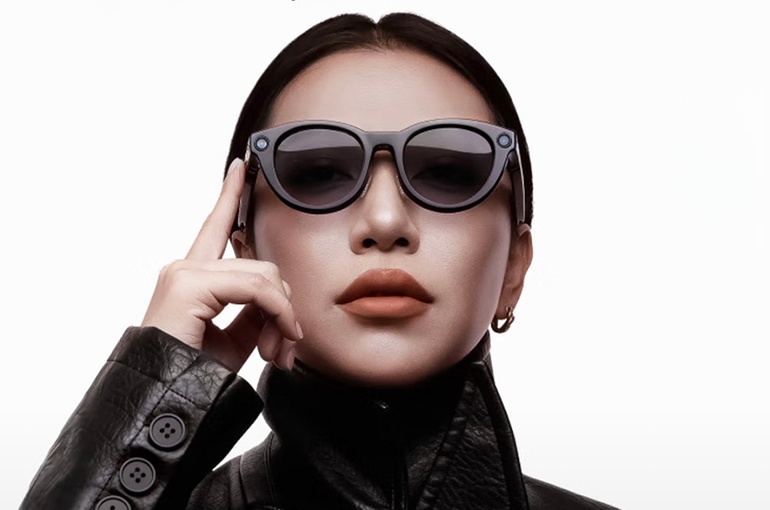
Chinese tech giant has introduced its Xiaodu Pro smart glasses on major online retail platforms JD.com and Tmall. Priced at 2,299 yuan (approximately $322 USD), these glasses are equipped with camera functions, AI translation, object recognition, reminders, and recording features. However, since they lack a display, they are not categorized as augmented reality glasses with AR capabilities.
Compared to most AI glasses that include camera functions, the Xiaodu Pro doesn’t offer any groundbreaking or standout features. Its price point is higher than that of local competitors, such as Xiaomi, Huawei, and RayNeo—whose Ray-Ban Meta model starts at about $299 USD.
The device’s main advantage stems from its integration within Baidu’s extensive AI ecosystem, which includes advanced language understanding, search and mapping functions, voice interaction, and an enhanced user experience, according to an industry insider familiar with the company.
Looking ahead, the company may need to improve its sales channels to better reach consumers. Collaborations with traditional eyewear brands and expanding offline retail networks, along with enhancing online service quality, could help increase product adoption.
However, industry experts point out that AI smart glasses still lag behind smartphones and dedicated AI apps in terms of user-friendliness. Technological challenges remain and need addressing before this category becomes more mainstream. The current user experience and practical applications require refinement, and mass market adoption will take additional technological progress and market development.
Back in 2014, the company announced plans for BaiduEye smart glasses designed for environments like shopping malls and museums. However, due to underdeveloped smart ecosystems and practical implementation hurdles, BaiduEye was never officially launched.
With fierce competition from other tech giants such as Xiaomi, Huawei, and Alibaba, it remains uncertain whether the company will succeed in capturing a share of the AI smart glasses market after nearly a decade since its initial development.
Smart glasses are increasingly becoming a focal point in China’s emerging smart product industry. Industry forecasts predict a 121% surge in shipments by the year’s end, totaling over 2.9 million units compared to last year. Among these, approximately 2.17 million will be audio-enabled glasses, while around 742,000 units will be AR or virtual reality glasses, reflecting increases of 178% and 38%, respectively.
 ChatGPT
 Perplexity
 Gemini AI
 Grok AI