Select Language:
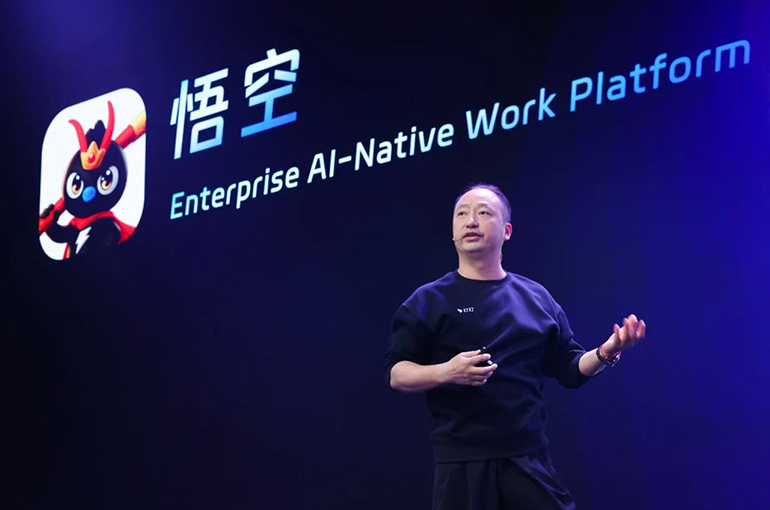
Alibaba’s workplace messaging platform has launched a new AI assistant aimed at rivaling the popular open-source tool OpenClaw.
This new AI, called Wukong, is tailored specifically for enterprise use. It can perform thousands of functions via a command-line interface once integrated into the office app, which boasts over 20 million business users, according to the company’s CEO during the launch event.
Recently, Alibaba established a dedicated AI division, aiming to advance its artificial intelligence initiatives. This new unit is directly overseen by the company’s CEO and combines several AI projects, including Tongyi Lab, Qwen, Wukong, the Model as a Service division, and the AI Innovation team.
The company plans to connect its extensive business infrastructure—encompassing platforms like Taobao, Tmall, Alipay, and Alibaba Cloud—with Wukong by integrating various skills. The goal is to develop a unified AI output hub for workplace scenarios.
OpenClaw, created by Austrian developer Peter Steinberger, gained global attention for its robust task execution capabilities. Several Chinese tech giants, such as Tencent, ByteDance, and Baidu, have since released comparable AI agents with similar functions.
However, OpenClaw’s security vulnerabilities have drawn concern from Chinese authorities. The National Computer Network Emergency Response Team and the Internet Finance Association issued warnings, citing potential risks like information leaks and remote hacking of computers.
In contrast, Wukong offers enhanced security measures. It automatically inherits the company’s enterprise permission settings, allowing IT departments to centrally control its operation, resource use, and security policies, according to the CTO of the platform.
As tokens become increasingly important in AI services, the future of office automation may shift from traditional subscription models to usage-based API calls. The company is considering adopting a pay-as-you-go or performance-based business model for Wukong, the CTO added.
 ChatGPT
 Perplexity
 Gemini AI
 Grok AI