
Select Language:
The number of job roles explicitly requiring expertise in artificial intelligence tools more than tripled in the first week after the Chinese New Year holiday compared to the previous year. This surge was driven by the launch of several new applications during that period.
Job openings demanding AI skills increased by 215% from February 24 to March 1, according to the latest Talent Supply and Demand Report from a recruitment platform. The average annual salary for these positions reached approximately $39,635, generally surpassing positions without such requirements.
Based on early weekly data, technology-driven development is expected to be the primary focus of this year’s hiring trends. The ongoing integration of AI with advanced manufacturing is projected to sustain growth in technical roles, keeping demand high. Additionally, companies are placing greater emphasis on combined digital, efficiency, and composite skills, leading to more detailed job descriptions and specific competency needs. Competition for efficient recruitment is also expected to intensify.
AI expertise is no longer confined to technical jobs; it is rapidly expanding into product management, operations, creative fields, and other functions, becoming a common workplace competency.
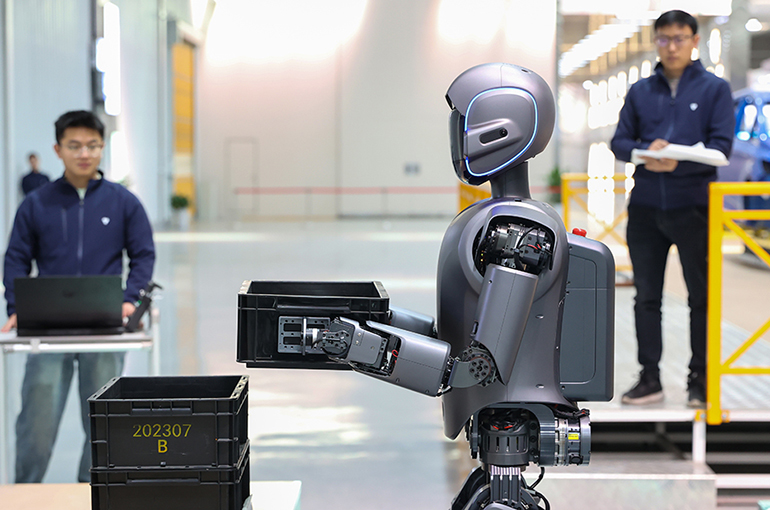
Last week, new job postings in the embodied intelligence sector increased by 74% year over year, significantly outpacing the industry average. The average annual salary in this field is around $48,665, attracting top talent to this cutting-edge industry. Embodied intelligence has evolved from a technical concept to being deeply integrated within automotive, manufacturing, logistics, and other core industries. The demand for workers with skills in hardware manufacturing, critical algorithms, and basic components has surged explosively, prompting companies to develop targeted talent strategies.
Shanghai, Shenzhen, and Beijing continue to lead in the proportion of new job opportunities, maintaining their status as primary recruitment centers due to their overall strength. However, cities like Wuhan and Changsha are experiencing rapid growth. Overall, talent recruitment is expanding from first-tier cities to surrounding satellite cities and industrial areas, optimizing talent distribution and offering new opportunities for industrial upgrading and workforce development across regions.
Several emerging cities, including Wuhan, Chengdu, Chongqing, Xi’an, and Zhengzhou, have seen swift economic growth and population increases. According to an economic reform expert, these cities function as transport hubs, boast rich cultural heritages, host many universities, and offer strong education and healthcare systems. They also present abundant job prospects and lower living costs compared to traditional first-tier cities, drawing increasing numbers of skilled professionals.
 ChatGPT
 Perplexity
 Gemini AI
 Grok AI