Select Language:
On December 4th, Fast Technology reported that on December 1st, Doubao Mobile Assistant released a technical preview version, marking a new phase of collaboration between Doubao and smartphone manufacturers on the operating system level for a mobile AI assistant.
Unlike traditional phone assistants, Doubao Mobile Assistant operates at a system-wide level, capable of controlling the device itself. It can automatically switch between multiple applications based on user commands, mimicking human-like manipulation of the phone’s functions.
Zhang Hongyu, a notable figure in the tech industry, shared a video discussing the imminent battle over control of mobile desktops. He pointed out that Doubao’s assistant directly challenges the “moat” of major internet giants. Historically, companies like Taobao and Meituan relied heavily on user engagement time and advertising revenue. In contrast, Doubao allows users to complete tasks without browsing homepages or viewing ads, effectively disrupting traditional traffic and monetization models.
Predicting potential responses from industry giants, Zhang warned that providers like Alibaba, Tencent, and Meituan likely won’t remain passive. These companies could modify their app interfaces, implement dynamic verification codes, or hide critical information to make AI-based reading and control more difficult.
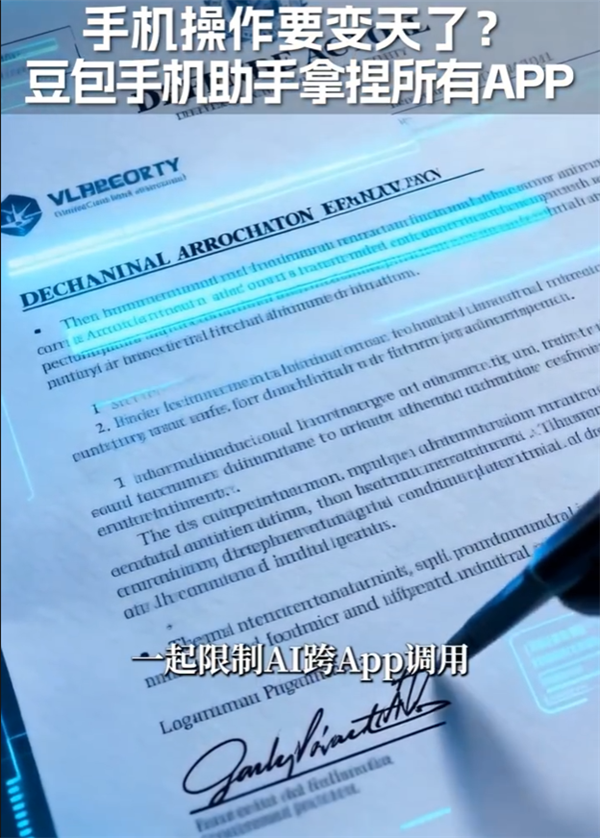
Furthermore, it’s anticipated that these tech giants might form a “joint defense pact” to restrict cross-application AI interactions, aiming to contain Doubao’s influence. Smartphone manufacturers are also expected to defend their control, as seen with MIUI from Xiaomi and HarmonyOS from Huawei, which have the core permissions needed to limit the app’s operation by restricting functionalities or slowing down AI interactions. They may also develop and pre-install their own AI assistants in upcoming devices.
Zhang emphasized that regardless of how this control power struggle unfolds, the ultimate beneficiaries are likely to be the users. Similar to the past battles in ride-sharing and food delivery sectors, industry competition tends to lead to more user-friendly experiences.
The success of Doubao in breaking through app barriers remains uncertain, especially with major tech firms potentially suppressing its growth. This ongoing wave of industry transformation is one to watch closely, as it could reshape how mobile control and AI interplay within the ecosystem.
 ChatGPT
 Perplexity
 Gemini AI
 Grok AI