
Select Language:
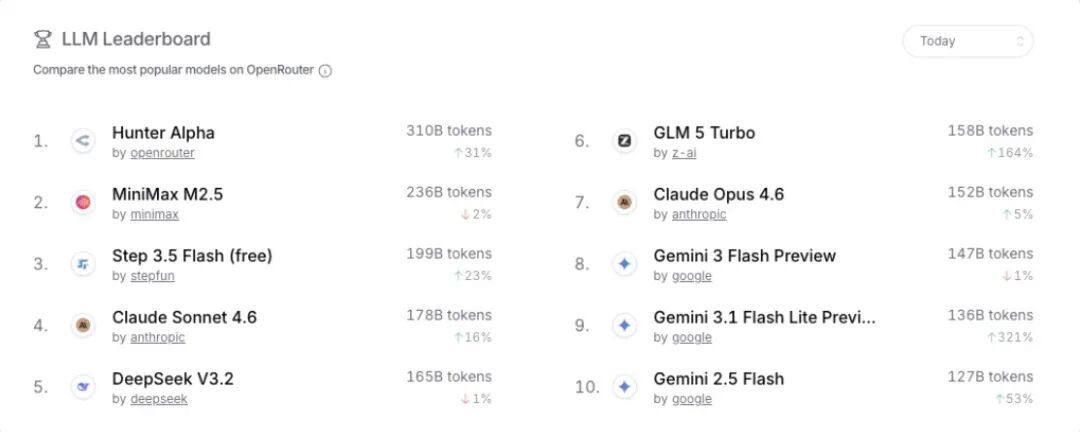
On March 19th, news broke about a mysterious AI model dubbed “Hunter Alpha” that created a significant buzz on OpenRouter, the world’s largest API aggregation platform. For a time, it held the top spot in the large model call rankings. Many online speculators believed it was an early version of DeepSeek V4.
That same day, Xiaomi officially stepped forward, announcing the launch of three new large AI models: MiMo-V2-Pro, Omni, and TTS. The company also offered a limited-time free trial for a week, inviting users to experience these innovations firsthand.
Luo Fuli, head of Xiaomi’s MiMo large model division, shared a detailed message emphasizing that these offerings represent Xiaomi’s first full-stack product series explicitly crafted for the intelligent agent era. He described their approach as a “quiet surprise,” noting how swiftly the shift from traditional chat modes to intelligent proxy modes happened—so rapidly that even Xiaomi’s own team was taken aback. This transition was marked by a mix of excitement, challenge, and fascination.
The backbone of Xiaomi’s advancements began months ago, focusing on enhancing long-context reasoning capabilities. The initial goal was to boost efficiency in processing extended contexts. The integration of a hybrid attention mechanism brought genuine innovation without overextending system resources. Luo highlighted that these architectural choices, including a 1 terabyte contextual window and MTP reasoning for ultra-low latency and cost, were premeditated structural advantages, not mere reactions to market trends.
What truly transformed their approach was the team’s first experience with a complex intelligent agent framework, which Luo referred to as “carefully orchestrated context.” His immediate reaction was one of shock. Despite attempts to persuade his team to embrace this new technology, he resorted to a strict directive: “Any member of the MiMo team who has fewer than 100 conversations tomorrow can resign.” This tough measure spurred the team’s imagination, fueling their research speed once they bought into the system’s potential.
Luo reflected on the rapid development process, drawing from his experience building DeepSeek R1. He summarized that:
– Building the backbone and infrastructure demands long strategic periods—often a year—to see meaningful returns.
– Post-training agility requires a different skill set, emphasizing product-driven evaluation, shorter iteration cycles, and early paradigm shifts.
– Fundamental qualities such as curiosity, sharp technical intuition, decisive execution, and full dedication remain essential.
– Perhaps most undervalued is a sincere passion for the world you help create.
Looking ahead, Luo assured that Xiaomi plans to open-source the new MiMo-V2 series once the models reach sufficient stability and maturity.
 ChatGPT
 Perplexity
 Gemini AI
 Grok AI