
Select Language:
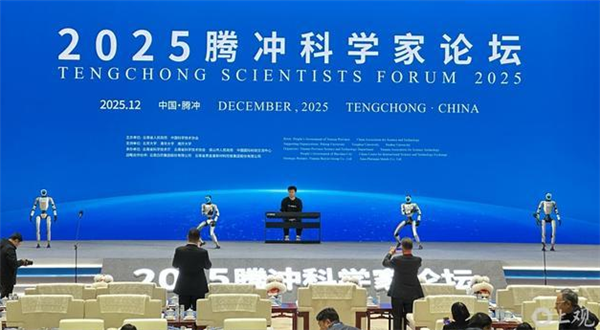
At the 2025 Tengchong Scientists Forum, Yu Shu Technology founder Wang Xingxing offered an in-depth look into the development of humanoid robots, highlighting the core philosophy of anthropomorphism and the current practical challenges.
Wang emphasized that public preference leans toward robots that resemble humans. “People like robots that look human,” he said, noting that the more attractive and human-like a robot appears, the more willing consumers are to accept and purchase it.
He also pointed out that contemporary AI technology heavily relies on data, with the quality and volume of data directly impacting AI capabilities. Specifically, for humanoid robots, there is still a scarcity of large-scale, high-quality behavioral and motion data needed to improve their functionality.
During the presentation, Wang showcased some progress made by Yu Shu Technology in the field. By collecting real human motion data in advance and training AI in simulated environments, their robots can now replicate a broad spectrum of human movements—essentially, if a human moves a certain way, the robot can mimic that action precisely.
However, Wang acknowledged that AI models embedded in embodied intelligence are still far from perfect. “Right now, it’s similar to where AI was three years before ChatGPT’s emergence—clear direction, but significant breakthroughs yet to come,” he explained.
He expressed optimism that achieving a scenario where a robot can perform about 80% of tasks across 80% of unfamiliar everyday situations, simply through verbal or written instructions, would mark the “GPT moment” for embodied intelligence. Currently, robots excel at specific, isolated tasks, but their performance drops sharply when environmental conditions change or when multiple tasks are stacked, revealing limitations in their generalization and reasoning abilities.
Looking ahead, Wang revealed an exciting possibility for the next Tengchong Scientists Forum: he might not need to attend physically. Instead, he plans to send a robot as his representative, which could be remotely controlled from Hangzhou, allowing real-time interaction through synchronized speech and actions. According to Wang, this technology already exists and is expected to be ready for practical deployment next year.
 ChatGPT
 Perplexity
 Gemini AI
 Grok AI