Select Language:
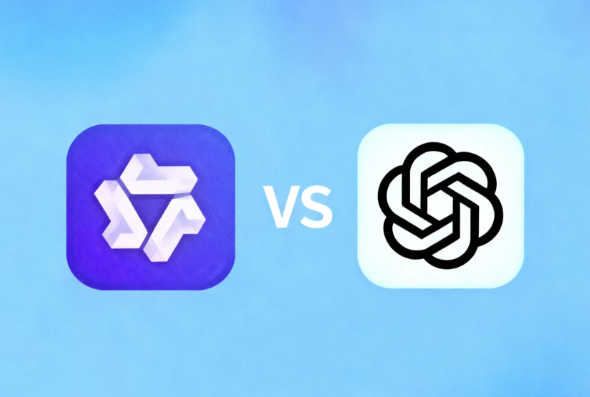
Recently, Ultraman has been facing an onslaught of challenges from the tech world. Just moments after being overwhelmed by Gemini 3 and Nano Banana 2, it was tasked with a rather awkward project—drafting a GPT 5.1 mess. Then, yesterday, Alibaba suddenly launched a new app called “Qianwen,” with a clear target: taking on ChatGPT directly.
Rumors circulating earlier suggested that Alibaba had secretly initiated the “Qianwen” project, aiming squarely at the popular ChatGPT. To everyone’s surprise, they moved quickly and went live without much fuss. This development caught many off guard, especially those less attuned to the AI scene.
A bit of context is necessary here. The core model behind Qianwen, known as Qwen, has long been making waves globally. During the GTC conference, veteran industry analyst Huang highlighted that Qwen dominated the worldwide open-source model market, with its share rapidly increasing. In AI competitions, Qwen3 ranks third overall, trailing only behind some closed-source giants.
Even in the US, AI experts have expressed skepticism, wondering whether Silicon Valley’s advancements might be built atop Qwen. The term “Qwen Panic” has emerged, describing how Qwen’s affordability and open-source nature put pressure on American models, which are often costly and closed.
Up until now, Qwen’s primary focus has been on enterprise applications—integrating with business projects. Its presence among everyday consumers has been relatively subdued, with Alibaba maintaining a rather low profile on the consumer front. But that might be about to change. The rebranding of “Zhongyi” to “Qianwen” App signals a strategic shift toward the consumer market.
Our tech reviewer, Shi Chao, tested the app and found its overall style to be straightforward and efficient. The interface features a simple dialogue box, a few options, and some recommended questions. Swiping up revealed that users can switch to Qwen3-Max, the most advanced model currently available in the app.
With such impressive capabilities, the question arises: How does it perform on real tasks? Shi Chao tested the app’s writing abilities—an essential feature, considering how AI hallucinations are a common frustration. Surprisingly, Qianwen’s responses felt rather poetic at times, even encouraging users with inspirational words about overcoming obstacles and seeking truth.
In one exchange, the app said: “To break the spell, only your own eyes, feet, and heart can lead the way. As for the monsters in the iron house, let them speak for themselves—when everyone recognizes their true face, their illusions will vanish like smoke.”
Meanwhile, Gemini, in a more aggressive stance, criticized AI hallucinations as just another form of “spiritual victory,” mocking the reliance on the “mind’s illusions” rather than real AI strength. Its tone was sharp, dismissing the hallucination phenomenon as laughable and sad.
Both models have their unique perspectives—Shi Chao notes that there’s no clear winner; both offer memorable quotes and express distinct attitudes. Interestingly, he discovered a handy feature: tapping the “ redo” button beneath responses prompts the app to generate multiple options, seemingly predicting what the user wants without extra input—a useful trait.
In a fun twist, Shi Chao posed a classic “Three Kingdoms” puzzle: why does Lü Bu need to play two “shields” when killing Dong Zhuo, and why do women need to do the same? GPT 5.1 straightforwardly dismissed it as nonsense, while Qianwen pulled up references, created a neat comparison table, and explained the mythological reasons, exhibiting a level of sophistication.
Beyond text, Qianwen’s multimodal abilities are impressive. Shi Chao showed the app a childhood favorite exercise, and it responded flawlessly, producing high-quality images that left him feeling both amazed and a bit overwhelmed.
The app can even animate images—Shi Chao uploaded a small Minion figurine to see it dance, which it did, much to his amusement. The app’s ability to generate and manipulate visual content is yet another testament to its robustness.
So why did Alibaba choose to hit the consumer market at this moment? The answer seems clear: they’ve already secured a dominant position in the enterprise space where Qwen has gained substantial market share and reputation. Moving into the consumer segment with Qianwen is a strategic attempt to build a new flow—turning the app into a versatile “AI gateway” that connects users to Alibaba’s vast ecosystem.
By integrating its cloud infrastructure (Alibaba Cloud), foundational models (Qwen), and consumer services (Taobao, Alipay, DingTalk), Alibaba is essentially building a comprehensive “Super App” ecosystem. This all-in-one approach makes the possibility of Qianwen evolving into a central hub for AI-powered services highly probable.
The move signals that the AI arms race is shifting from mere model competition to ecosystem dominance. Alibaba’s full-stack ecosystem, combining cloud, AI, e-commerce, logistics, finance, maps, and payments, provides a competitive edge that others find hard to match. The seamless integration could position Qianwen as a true “AI portal,” connecting countless services and making it easy for users to access a broad range of Alibaba’s offerings.
In summary, Alibaba’s foray into the consumer AI market reflects a broader strategy that leverages its extensive ecosystem to outperform competitors. With Qwen’s advanced capabilities and Alibaba’s infrastructure, the future looks promising for the giant’s AI ambitions.
 ChatGPT
 Perplexity
 Gemini AI
 Grok AI