
Select Language:
In recent developments within the tech community, Linus Torvalds, famously known as the father of Linux, has openly acknowledged his use of AI in programming. Last week, he shared a personal side project on GitHub called AudioNoise, which is designed to produce random digital audio effects. In the project description, Torvalds mentioned a notable shift in his approach to coding, highlighting the influence of AI tools.
He pointed out that the visualization tools he used were largely created with vibe-coding, a style of “atmosphere programming.” While he is more familiar with traditional simulation filters than with Python tools, he admitted that his initial efforts were just typical “Google it and copy” programming. However, he soon eliminated the middleman – himself – and started to directly use Google Antigravity to develop an audio sample visualizer.
For context, Google Antigravity is a newly integrated AI-native development environment (IDE), launched along with Gemini 3.0 by Google in November 2025. Torvalds also reflected on his role, stating that after nearly two decades, he’s no longer deeply involved in daily programming. Instead, his focus has shifted to overseeing system stability and handling emails, serving more as a technical overseer than a hands-on coder.
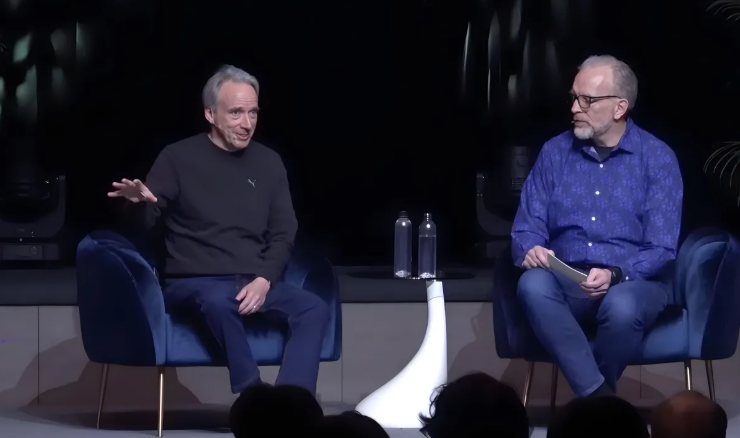
During a recent Linux Foundation open-source summit held in Seoul, Torvalds emphasized that he has never personally used AI coding tools extensively. He expressed skepticism about integrating AI into kernel development, asserting that AI-generated code remains difficult to apply effectively in such sensitive, low-level projects. From his perspective, AI is best suited for small, personal projects or “atmosphere coding,” rather than large, institutional software.
When discussing the potential of AI to replace programmers, Torvalds clarified that AI should be viewed as just another tool. Similar to how compilers freed programmers from writing raw assembly language, AI tools are meant to assist—even if they don’t eliminate the need for human developers altogether. His stance underscores a pragmatic view: AI can enhance productivity but isn’t expected to replace the core craftsmanship of programming.
 ChatGPT
 Perplexity
 Gemini AI
 Grok AI