Select Language:
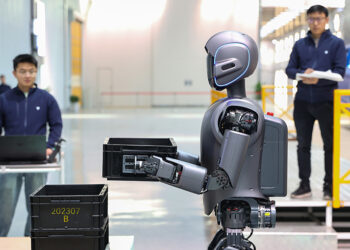
The spotlight on the viral success of singing robots showcased during the Lunar New Year Gala has sparked a fresh wave of debate about the future of automation and artificial intelligence within the entertainment industry. Behind the dazzling performances lies a complex landscape driven by innovation, economic considerations, and the unpredictable nature of public perception.
These robots, designed to mimic human performers with astonishing precision, have captured widespread attention for their ability to entertain audiences with synchronized dance routines and lifelike expressions. However, the meteoric rise of these mechanical stars raises questions about the broader implications for creativity and cultural authenticity.
Industry analysts point to a nuanced tension: on one hand, automation can deliver eye-catching spectacles that attract viewers and generate buzz. On the other, critics argue that an over-reliance on technology could erode the human connection integral to traditional performances. This ongoing debate underscores a broader industry dilemma—the coexistence of cutting-edge innovation and the preservation of artistic integrity.
Moreover, the economic drive behind deploying sophisticated robots is evident. Production companies see potential in reducing costs associated with human performers and exploring novel forms of audience engagement. Yet, this move also sparks concerns about job displacement and the cultural value of human artistry in an increasingly automated world.
As the discussion unfolds, it becomes clear that the incorporation of robots into cultural showcases isn’t just a technological trend but a reflection of deeper societal choices. The industry stands at a crossroads—whether to prioritize technological spectacle or to uphold the irreplaceable nuances of human creativity. Ultimately, the success of such ventures will depend on finding a delicate balance that celebrates innovation without overshadowing the human touch that defines cultural expression.
 ChatGPT
 Perplexity
 Gemini AI
 Grok AI