Select Language:
The rapid rise of Seedance 2.0 has sparked a wave of AI-enhanced videos on TikTok, especially those featuring iconic scenes from Stephen Chow’s classic films. Users have been creating clips where characters like至尊宝 from A Chinese Odyssey, Mrs. Bao from Kung Fu Hustle, or尹天仇 from The King of Comedy are brought to life anew, thanks to the capabilities of Seedance 2.0. With simple prompts, fans can now easily generate videos of their favorite celebrities interacting with beloved characters, producing surprisingly high-quality, fluid actions, expressive facial expressions, and even capturing Stephen Chow’s signature humorous style.
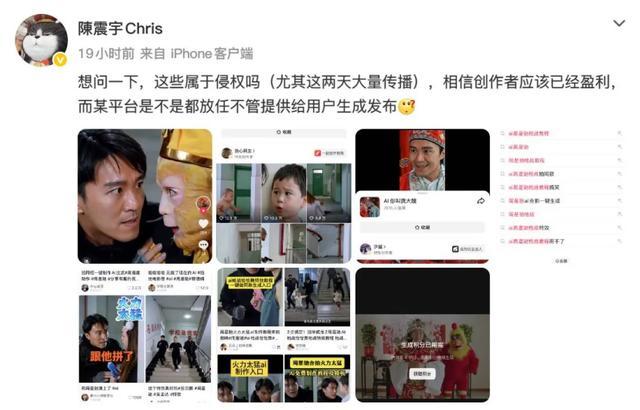
While this technological breakthrough has captivated audiences and driven massive online traffic, it has also ruffled feathers among copyright owners. Stephen Chow’s manager, Chen Zhenyu, voiced concerns on social media, questioning whether these videos constitute copyright infringement—especially given the recent surge in content spreading across platforms. Chen also wondered whether platforms have been turning a blind eye, essentially facilitating users’ rights to create and share such works without proper legal oversight.
Accompanying his statement were screenshots of various infringing videos, emphasizing in subtle tones the widespread misuse of the characters and images that belong to others. The backlash reflects a broader industry anxiety over the unchecked growth of AI creation tools, which, thanks to Seedance 2.0’s “open” creative environment, allows users to generate content involving major IPs effortlessly. Notably, many of the most viral videos on TikTok feature well-known franchises—like Disney’s Zootopia, or Marvel characters—recreated or reimagined through Seedance’s lens.
For example, a recent upload depicts Nick Wilde from Zootopia in a scene mimicking a fight in Kung Fu Hustle, demonstrating how seamlessly AI can blend different worlds. Such videos, while popular and generating significant engagement, serve as a cache of potential evidence in ongoing copyright disputes. Since Seedance 2.0 can produce videos that involve the full range of actions, expressions, and even voices, the risk of infringement becomes more tangible than static image generation.
This situation echoes major legal battles faced by global entertainment giants such as Disney, which has been actively defending its content rights through a series of lawsuits. Since 2025, Disney has filed suits against platforms like Midjourney and MiniMax, accusing them of unauthorized use of IP rights, including “Frozen,” “Star Wars,” and “Minions”. These cases are detailed and emphasize how AI-generated images—especially when recreating well-known characters—may infringe upon existing copyrights, regardless of whether the prompts are vague or detailed.
Disney’s legal campaign has also extended to American tech companies like Google, which they accuse of “massive copyright infringement” for AI-generated images using Disney characters. The reigning Hollywood powerhouse has been pushing to set industry standards, demanding AI firms implement mechanisms to prevent unauthorized use of protected IP during both training and content creation phases. Achieving such safeguards could involve licensing agreements, rigorous content filtering, or even more advanced technical defenses.
Seedance’s ability to generate video content raises the stakes further. While static images might allow room for “stylistic” or “parody” defenses, full-motion videos with expressive gestures, voice, and sound are far clearer evidence of copyright infringement. Given ByteDance’s massive user base and commercial ambitions, the potential scale of infringement and profits—especially considering the value of popular IPs—poses serious legal risks.
Disney’s strategy demonstrates a dual approach: they are scrutinizing the legality of the data used in training such AI models and actively monitoring the output for infringing content. The law in the United States and worldwide is tightening around the use of copyrighted materials for training AI. Company insiders and watchdogs have openly admitted that creating large training datasets entails crawling the web without explicit permissions, which makes adherence to copyright law challenging.
The precedent set by major cases, such as Anthropic’s recent $1.5 billion settlement and OpenAI’s licensing agreements with Disney, show that industries are prepared to enter into high-stakes negotiations or settle lawsuits through hefty payouts. These agreements often involve licensing copyrighted characters or texts explicitly, establishing a legal framework for future AI training and content generation.
For ByteDance, the parent company of Seedance, the picture isn’t any simpler. Because Seedance creates videos that are far more tangible and visually detailed, the risk of litigation is higher. The company faces potential lawsuits from multiple rights holders, especially as the platform’s ability to produce convincing impersonations and reinterpretations grows. While negotiations for licensing are an option, they could be costly and complex, considering the number of celebrities, organizations, and content owners involved.
Furthermore, the international and political context complicates the issue. As a Chinese-based company, ByteDance faces additional scrutiny and potential barriers from Western IP regulators, especially if it accelerates efforts to license or shut down infringing content. Its current approach—treading carefully and waiting for legal outcomes—may buy it some time, but a more proactive stance might be necessary to mitigate risks in the long run.
Legal experts suggest that technological defenses like content filtering and automated watermarking can only go so far. When data used for training openly includes copyrighted works, even sophisticated filtering during content creation might not prevent infringement claims. For ByteDance, outright ceasing to use copyrighted IP in training data or licensing specific rights could be the most sustainable strategy, though at a significant financial investment.
Ultimately, the industry’s broader evolution seems to be heading toward stricter regulation. The enforcement efforts by Disney and others serve as a warning: in the race to innovate with AI, respecting intellectual property rights will become less negotiable, and improper usage can lead to enormous legal costs. For companies like ByteDance, navigating this landscape requires a delicate balance—between fostering creative freedom and respecting creators’ rights—before the legal landscape catches up with AI’s rapid pace of development.
 ChatGPT
 Perplexity
 Gemini AI
 Grok AI