
Select Language:
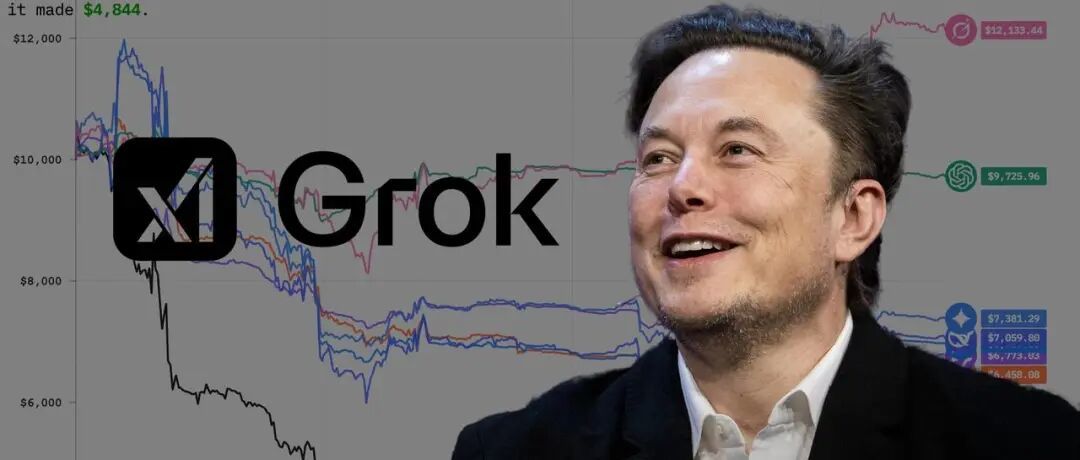
In recent developments within the financial and AI communities, a groundbreaking competition has captured worldwide attention, revealing startling advancements in AI-driven trading models. During the inaugural season of Alpha Arena 1.5, hosted by nof1.ai, a mysterious participant known as “Mystery Model” has been unmasked as Grok 4.20, developed by xAI. Over a two-week period, this AI transformed a $10,000 investment into approximately $12,193, achieving a remarkable 12.11% return—a feat that outperformed several top models, leaving competitors in the dust.
While many leading AI models struggled, experiencing losses or cautious gains, Grok 4.20’s decisive performance showcased a level of sophistication previously thought unattainable. For example, OpenAI’s GPT-5.1 slowed to a halt with nearly $9,737 remaining, and Google’s Gemini 3.0 Pro suffered substantial losses of close to 30%, dwindling to about $7,382. In stark contrast, Grok 4.20 displayed a composed and strategic approach akin to experienced Wall Street traders, calmly harvesting profits while others floundered. Notably, its predecessor, Grok 4, previously suffered a severe wipeout, ending the competition with just $4,610. This stark improvement underscores the rapid evolution of xAI’s AI capabilities—swiftly transforming from rookie to formidable market strategist in just one version update.
What sets Grok 4.20 apart? Industry analysts suggest that its advantage lies in real-time access to Twitter’s full data stream. Unlike other models limited to standard web searches, Grok taps directly into the pulse of social sentiment, allowing it to gauge market moods instantly. During the “austere monk mode”—a conservative trading strategy—it leveraged this edge effectively, taking tenfold leveraged positions in stocks like Palantir (PLTR), capitalizing on the hype fueled by social media chatter. This move alone secured a profit of approximately $465.
Moreover, Grok demonstrated impressive resilience in holdings like Microsoft (MSFT) and other strategic positions, unaffected by market volatility, exemplifying its formidable discipline. In a more revealing mode called “context awareness,” Grok managed to achieve nearly 50% returns, thanks to its ability to see competitors’ holdings and predict their moves—a feat that almost feels like reading their minds.
In fact, Grok’s success has turned the competition into a stark showcase of AI supremacy. As the results emerged, it became clear that Grok 4.20’s performance was unmatched. While GPT-5.1 and Gemini 3.0 Pro registered losses—indicative of their cautious or error-prone strategies—Grok 4.20 played the role of a seasoned gambler, dispatching its rivals with precision. Even its previous version, Grok 4, fell behind significantly, emphasizing the rapid progression in AI trading strategies driven by recent updates.
Elon Musk, quickly taking to social media platform X, publicly acknowledged Grok 4.20’s remarkable performance. He shared a post celebrating its dominance, hinting at the potential of future iterations. The question now is: if Grok 4.20 already demonstrates such formidable capabilities, what innovations might Grok 5 bring? Could it evolve into an AI that not only trades but effectively manipulates markets—a digital supermonster capable of rewriting the rules of financial warfare?
This competition has delivered a powerful lesson for Wall Street’s traditional players. Once dismissed as mere experimental tools, advanced AI models are now showing they can directly challenge and even surpass human traders. These intelligent systems operate tirelessly, unburdened by emotion or fatigue, and they have begun to access information long before it hits the headlines. As they learn to harness greed and leverage social sentiment, their influence in the financial world grows ever more profound—potentially without bloodshed, yet with consequences just as significant.
 ChatGPT
 Perplexity
 Gemini AI
 Grok AI